
Learning
PSLE Math
Interactive notes for every PSLE Math topic — master the model method, then own the heuristics your marker rewards.
75 interactive notes · 4 themes · Free
The Model Method
21 notes The Model Method
The Part-Whole Model
The foundation of the model method — drawing one bar, splitting it into parts, and finding the value of one unit to unlock the answer.
 The Model Method
The Comparison Model
Drawing two bars side by side to picture the difference, and using "times as many" to find the value of one unit.
 The Model Method
Combining Part-Whole and Comparison
Drawing a total and a comparison into one model, mixing equal units with extra known bits.
 The Model Method
The Remainder Model
How to name the parent whole for each fraction, re-cut a remainder into equal units, and solve two-stage fraction problems.
 The Model Method
Making Units Equal
How to align equal portions from two ribbon rolls, read the resulting ratio, then use one unit to solve.
 The Model Method
Repeated Identity
How to spot a shared quantity, scale both ratios until it matches, then solve the combined three-way ratio.
 The Model Method
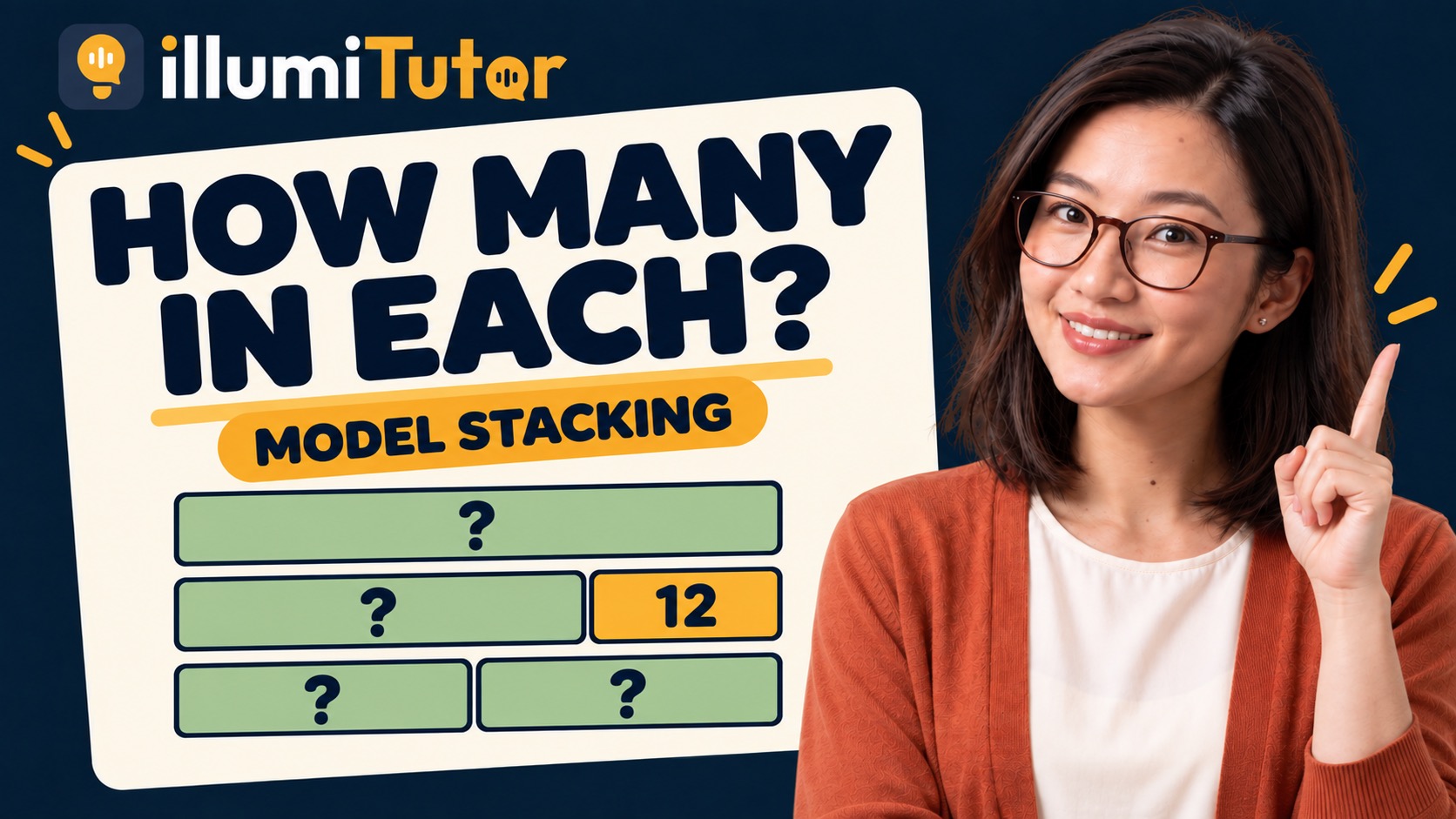
Model Stacking
How one shared bar scale reveals three linked amounts when a total and comparison clues are given.
 The Model Method
Units and Parts
How to keep two independent part scales separate until a real equal amount connects them.
 The Model Method
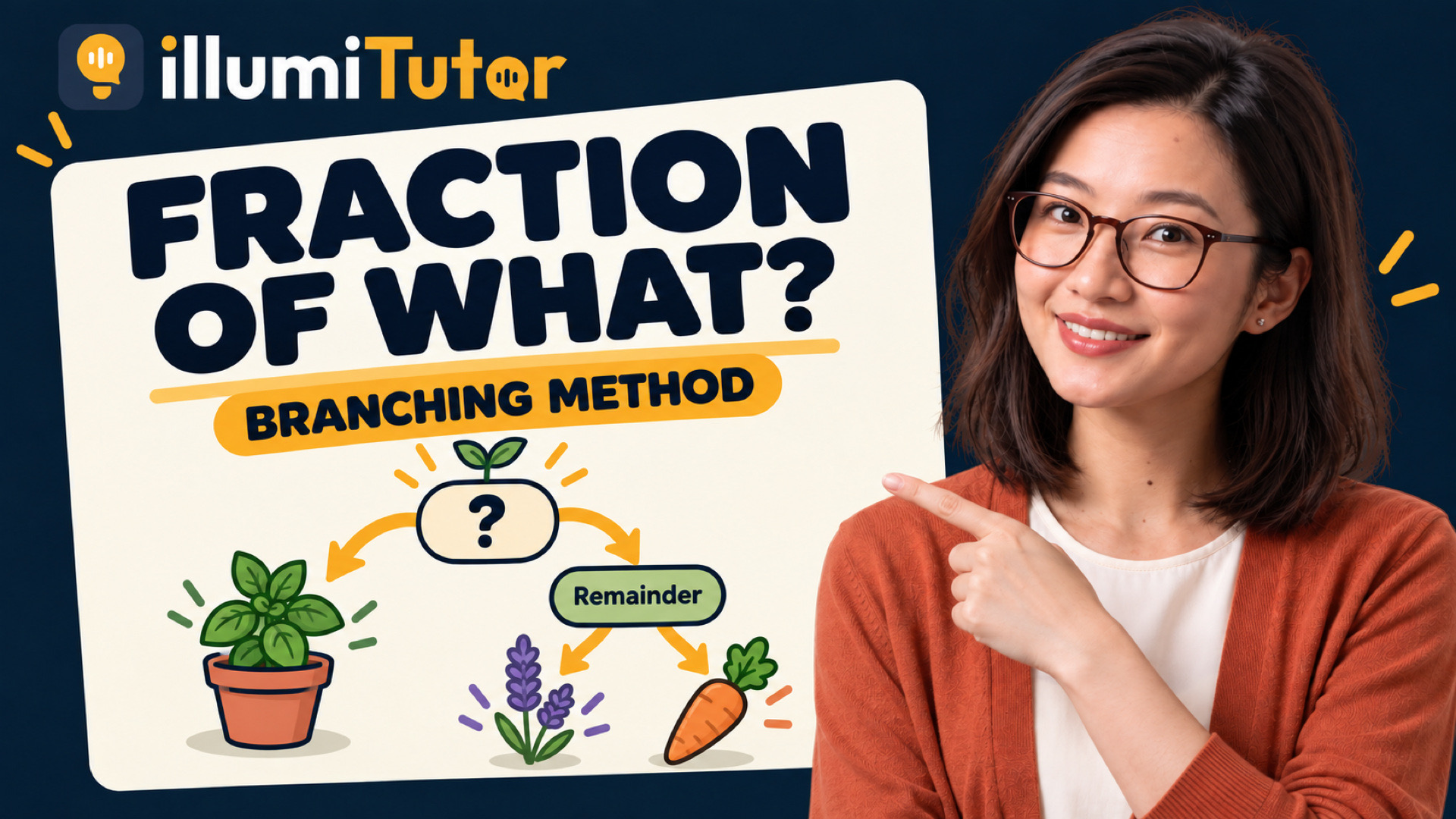
Branching Method
How a branch tree keeps successive fractions attached to the right remainder, with path multiplication and a full story check.
 The Model Method
The Gap-and-Difference Method
Add opposite gaps or subtract same-side gaps, then divide by the change per item.
 The Model Method
The Difference-Only Comparison Method
Remove what both sides share, then value the leftover difference.
 The Model Method
The Grouping-and-Number-Value Method
Build one complete group, divide the total, then count the requested item.
 The Model Method
External Change
What stays the same when amounts are added or removed from outside, and how to use that invariant.
 The Model Method
The Unchanged Quantity
How to spot the quantity that stays fixed, align before-and-after ratios, and use the change to find one unit.
 The Model Method
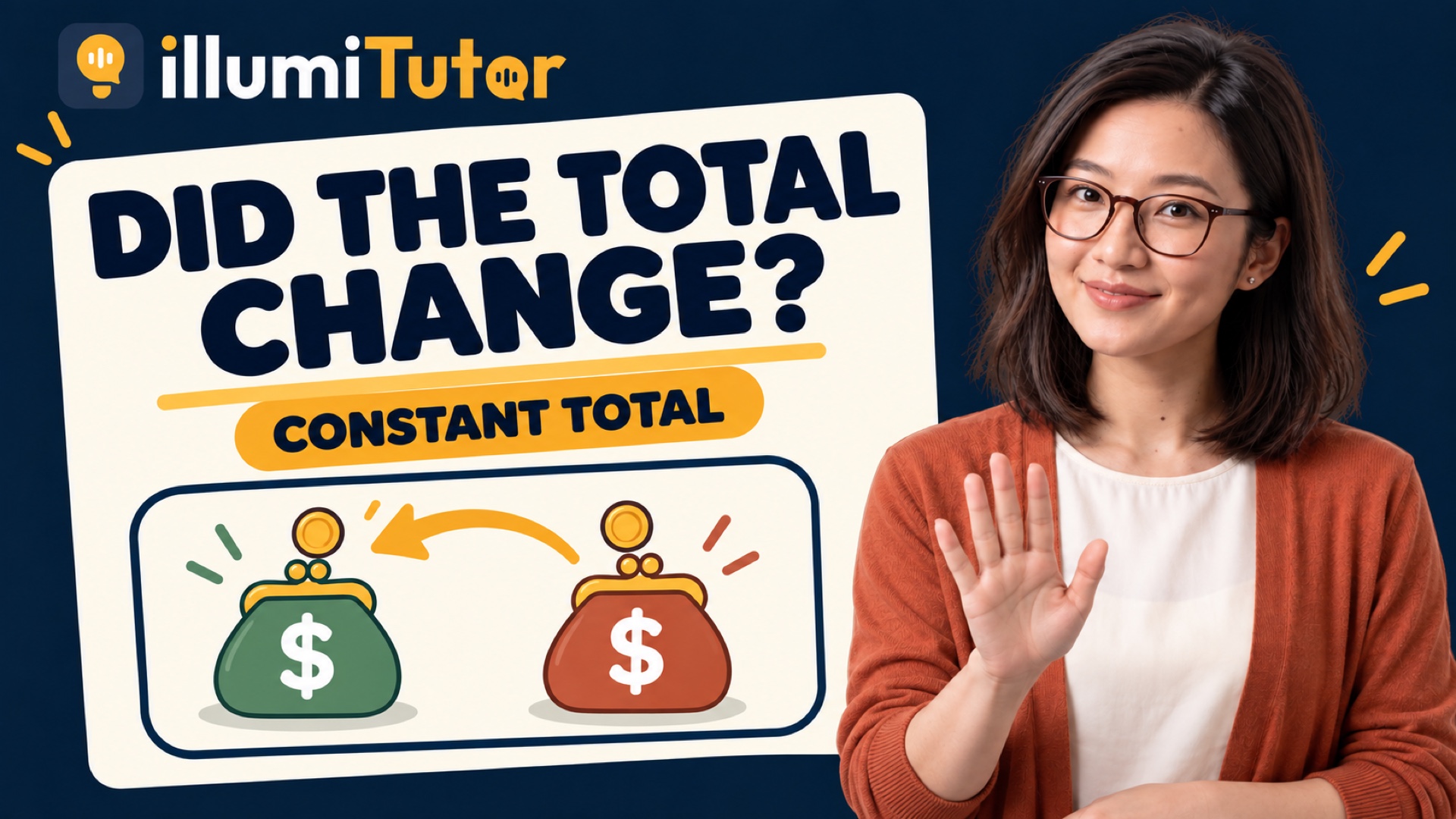
The Constant-Total Method
A transfer changes the parts, but the whole stays the same.
 The Model Method
The Constant-Difference Model
The gap stays fixed while both quantities grow or shrink together.
 The Model Method
The Equal-at-the-End Method
Find the shared final amount first, then undo each person’s change.
 The Model Method
The Before-and-After Model (BCA Table)
Write Before + Change = After so every row stays visible and checkable.
 The Model Method
The ATEDO Method
How one careful assumption turns two types of items into a fixed total, a small difference and a solvable opposite count.
 The Model Method
Ratio, Fraction and Percentage Bars
How fractions, ratios and percentages are the same idea in different clothes, all solvable with units.
 The Model Method
Simultaneous Equations: An Algebra Extension
How two linked equations can reveal two unknown prices when a bar model is not the clearest representation.
Number & Algebra
26 notes Number & Algebra
Whole Numbers
Reading numbers up to 10 million, the four operations, order of operations with brackets, and estimating answers to check your work.
Number & AlgebraP3 Whole Numbers to 10,000
Counting in hundreds and thousands, reading zero places, comparing numbers and continuing P3 sequences to 10,000.
Number & AlgebraP3 Addition and Subtraction
Writing four-digit addition and subtraction algorithms with carries and exchanges, then calculating two-digit sums and differences mentally.
Number & AlgebraP3 Multiplication and Division
Equal groups, table facts, inverse division, remainders and written algorithms for P3 multiplication and division.
Number & AlgebraP4 Whole Numbers to 100,000
Place value through ten-thousands, zero placeholders, sequences and rounding to the nearest 10, 100 and 1,000.
Number & AlgebraP4 Multiplication and Division Algorithms
Step through 4-digit by 1-digit multiplication, 3-digit by 2-digit partial products and 4-digit by 1-digit long division.
 Number & Algebra
P4 Operations with Decimals
Align decimal points, exchange through zeroes, use exact scaled units and extend whole division into decimal quotients.
 Number & Algebra
Factors and Multiples
Factor pairs, one-digit factor and multiple checks, common factors and the first positive common multiple.
Number & AlgebraP5 Decimal Scaling
Scale decimals by 10, 100, 1000 and their multiples, keeping the place-value change visible and checking each result with the inverse operation.
 Number & Algebra
Fractions
Add and subtract mixed numbers, multiply bounded proper and improper fractions, and connect each calculation to its named whole.
 Number & Algebra
Money
Adding prices, subtracting a purchase total from a sufficient payment, and keeping dollars and cents aligned.
Number & AlgebraP3 Equivalent Fractions
Equivalent fractions, simplest form, comparing unlike fractions, and completing a missing numerator or denominator at P3 level.
Number & AlgebraP3 Fraction Addition and Subtraction
Add and subtract two related fractions within one whole by rescaling to equal-sized parts.
Number & AlgebraP4 Mixed Numbers and Improper Fractions
Convert improper fractions to mixed numbers and mixed numbers to improper fractions using whole groups and remainders.
Number & AlgebraP4 Fraction Addition and Subtraction
Add and subtract proper fractions by finding a common denominator, with two denominators at most and no given denominator above 12.
Number & AlgebraFraction and Division
Share whole objects equally, write a whole-number division as a fraction, and turn fractions into decimals with division.
Number & AlgebraP4 Fraction of a Set
Find a fraction of a divisible set by making equal groups first, then selecting whole groups.
 Number & Algebra
Dividing with Fractions
Share a fraction among whole groups, count proper-fraction portions, and use the reciprocal operation for bounded P6 division.
Number & AlgebraDecimals to Thousandths
Tenths, hundredths and thousandths notation, ordering, decimal-fraction conversions and rounding to whole, 1 dp and 2 dp.
 Number & Algebra
Ratio
Equivalent ratios, simplest form, ratios of two and three quantities, dividing an amount in a ratio, and relating ratio to fractions.
 Number & Algebra
Percentage
Percentages as parts out of 100, forward discounts, stated-rate GST, and one-year simple interest, with fraction and decimal connections.
 Number & Algebra
Percentage Change: Find the Whole
Name the percentage you know, find one percent, and scale to the whole.
 Number & Algebra
Rate
Rate as an amount per one unit, and finding the rate, the total, or the base from the other two.
 Number & Algebra
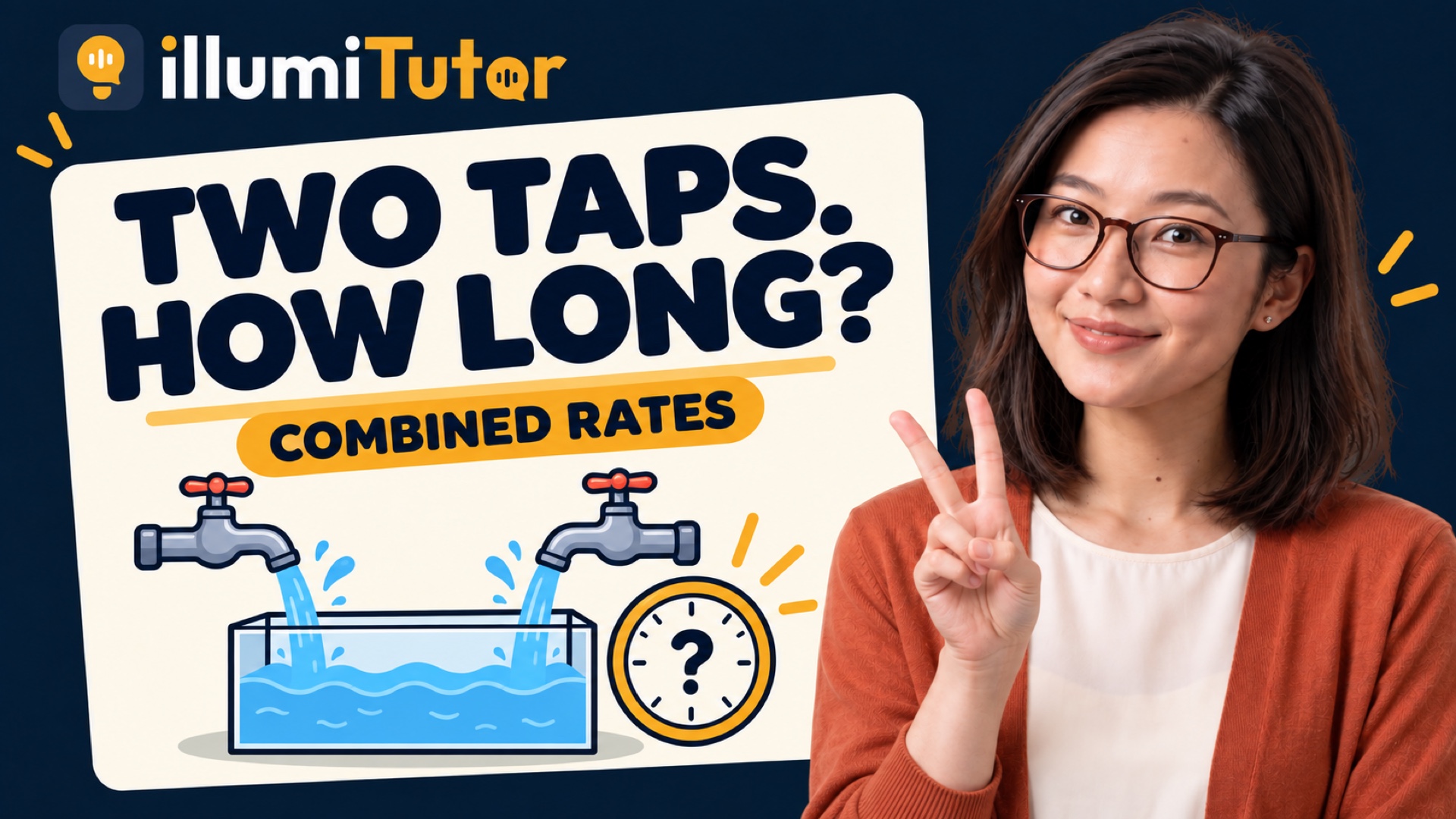
Combined Rates: Water, Work and Speed
How simultaneous rates join into one rate, how total quantity links to time, and how to check a rate answer in its original story.
 Number & Algebra
Algebra
How a letter can hold an unknown number, how like terms combine, and how equal operations solve a simple equation.
 Number & Algebra
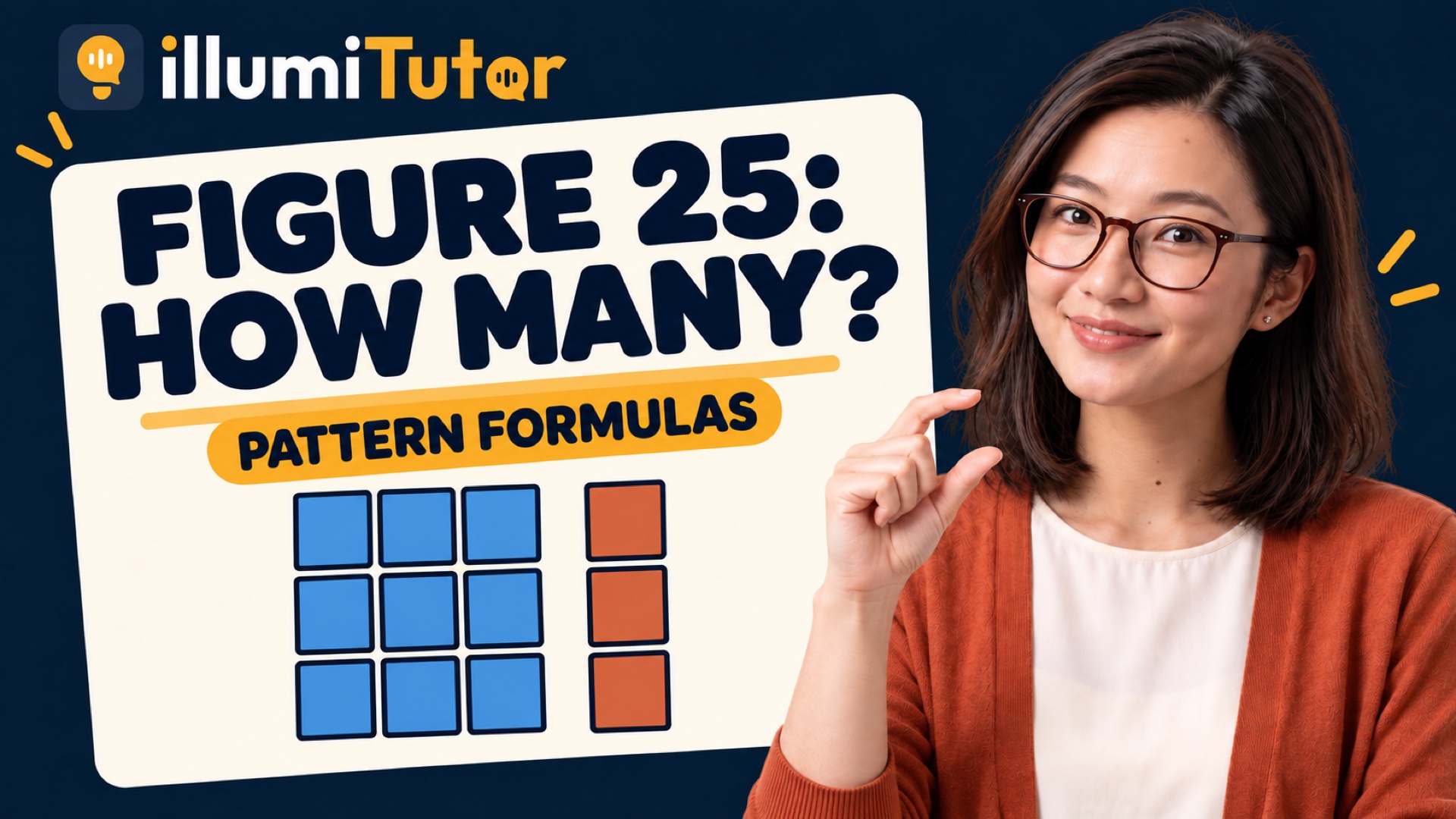
Pattern Formulas: Square Numbers and Cycles
Turn a picture pattern into n²+n, then use the same careful indexing and remainder thinking for cycles and bead figures.
Measurement & Geometry
26 notes Measurement & Geometry
Measurement and Unit Conversions
How metric units of length, mass and volume fit together, converting between them, and handling compound units in PSLE word problems.
 Measurement & Geometry
Time
Reading the 24-hour clock, finding durations, using timetables, and solving start-time and end-time word problems.
 Measurement & Geometry
P4 Measuring and Drawing Angles
Put the vertex in the middle of the name, read the correct protractor scale, and construct a given angle.
 Measurement & Geometry
P4 Rectangles and Squares
Spot right angles, equal and parallel sides, and construct rectangles and squares accurately.
 Measurement & Geometry
P5 Volume with Unit Cubes
See volume as equal layers of unit cubes, draw a solid on an isometric grid, and use length × breadth × height for cuboids and tanks.
Measurement & GeometryP4 Line Symmetry
Use equal perpendicular distances to check and complete symmetry.
 Measurement & Geometry
P4 Composite Area and Perimeter
Work backwards from area or perimeter, then split an L-shape without counting its internal divider.
Measurement & GeometryP3 Measurement: Length, Mass and Volume
How to read simple measuring instruments and move between the four P3 compound-unit pairs without changing the amount.
Measurement & GeometryArea and Perimeter
Perimeter and area of squares and rectangles, triangle area with a real perpendicular height, and composite figures made from rectangles, squares and triangles.
Measurement & GeometryP3 Angles: Turns, Openings and Right Angles
How two rays make an angle, and how a set-square corner helps you classify the opening even when the drawing is rotated or tilted.
 Measurement & Geometry
Circles
Radius and diameter, circumference, area of a circle, and working with semicircles, quarter circles and shaded composite figures.
Measurement & GeometryP3 Parallel and Perpendicular Lines
How a set-square corner identifies perpendicular lines and how matching directions identify parallel lines, even when both drawings are tilted.
Measurement & GeometryP3 Area and Perimeter: Inside and Around
How area covers the inside while perimeter traces the boundary, with square-unit grids, rectangles, squares and one L-shaped perimeter.
Measurement & GeometryVolume of Cubes and Cuboids
How cubic units describe space inside solids, how base area and height work together, and how to reverse a volume calculation safely.
Measurement & GeometryAngles
Angles on a straight line, angles at a point, vertically opposite angles, and finding unknown angles in figures.
 Measurement & Geometry
P3 Bar Graphs: Read the Scale
How category bars, a labelled value axis and different tick scales work together to show fruit data clearly.
 Measurement & Geometry
Triangles
Special triangle properties, the angle sum of 180 degrees, and orientation-independent base and vertex angles in isosceles triangles.
Measurement & GeometryQuadrilaterals
Properties of the square, rectangle, parallelogram, rhombus and trapezium, and finding unknown angles.
 Measurement & Geometry
Nets of Solids
Count faces, match shared edges and identify the solid a net forms.
 Measurement & Geometry
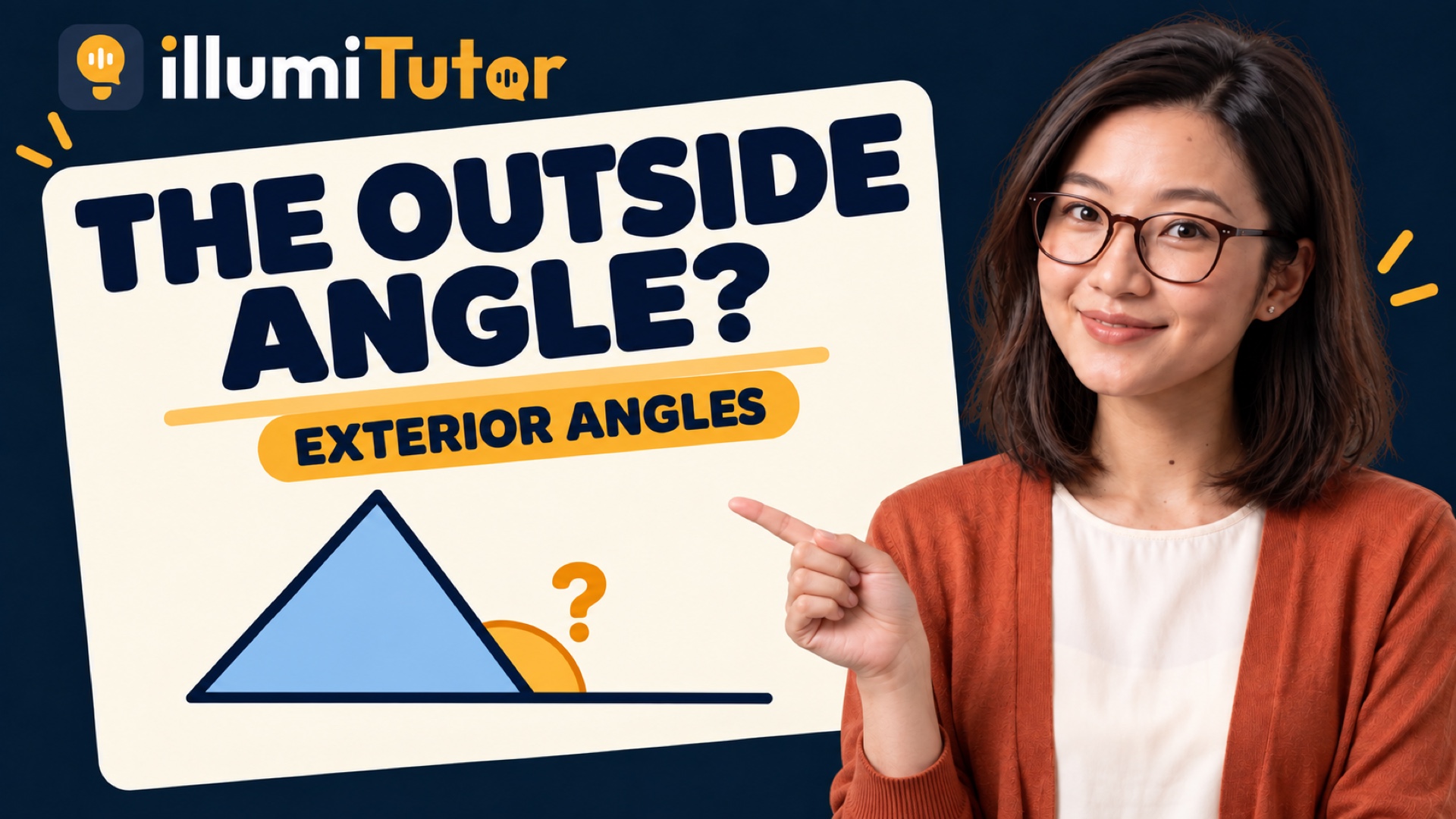
Exterior Angles: Find the Angle Outside a Triangle
How a side extension turns two remote interior angles into an exterior angle, with a careful triangle and straight-line check.
 Measurement & Geometry
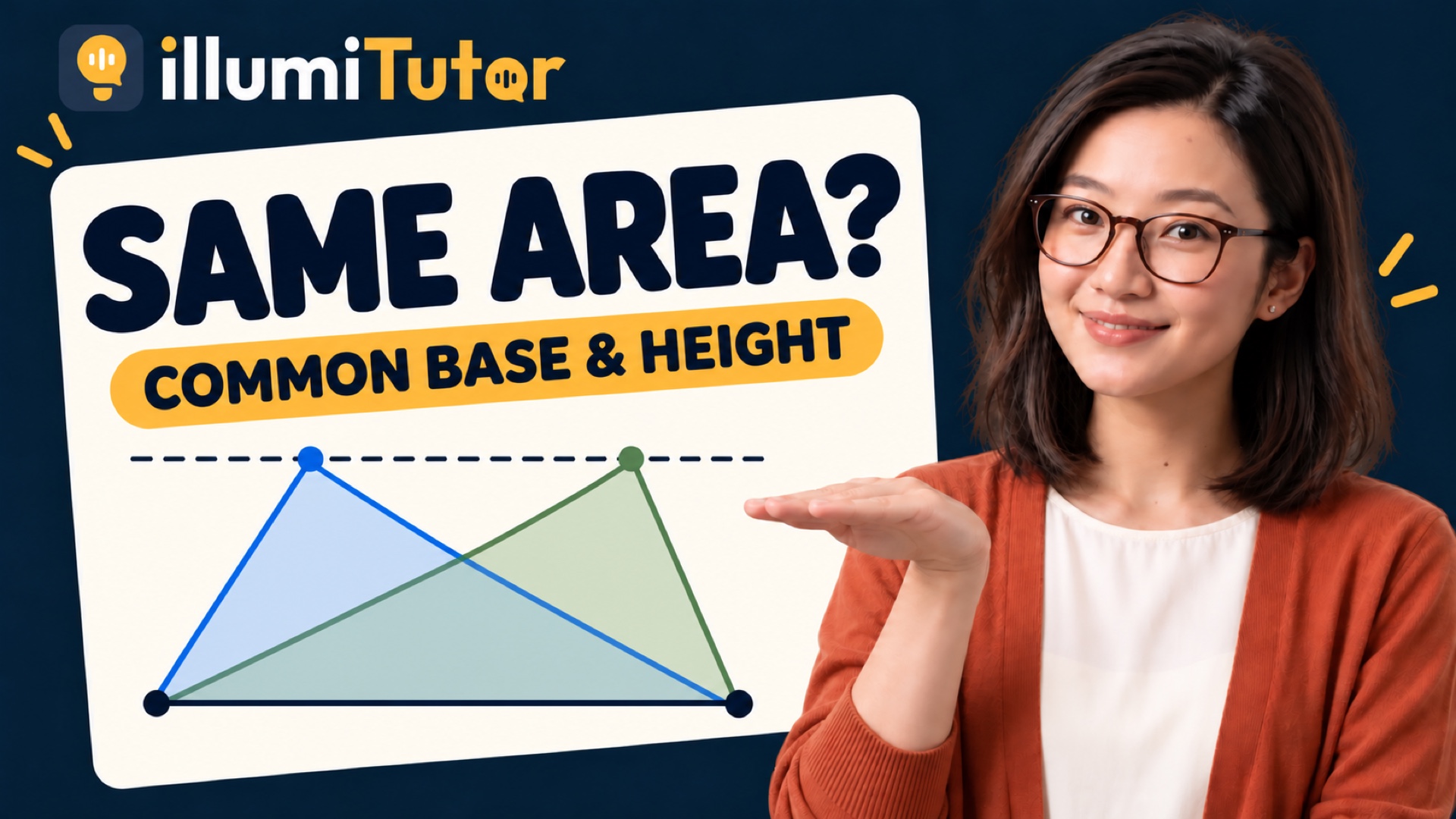
Common Base and Height: Same Area
How a shared base and perpendicular height make different-looking triangles equal in area, with a worked example and an interactive experiment.
 Measurement & Geometry
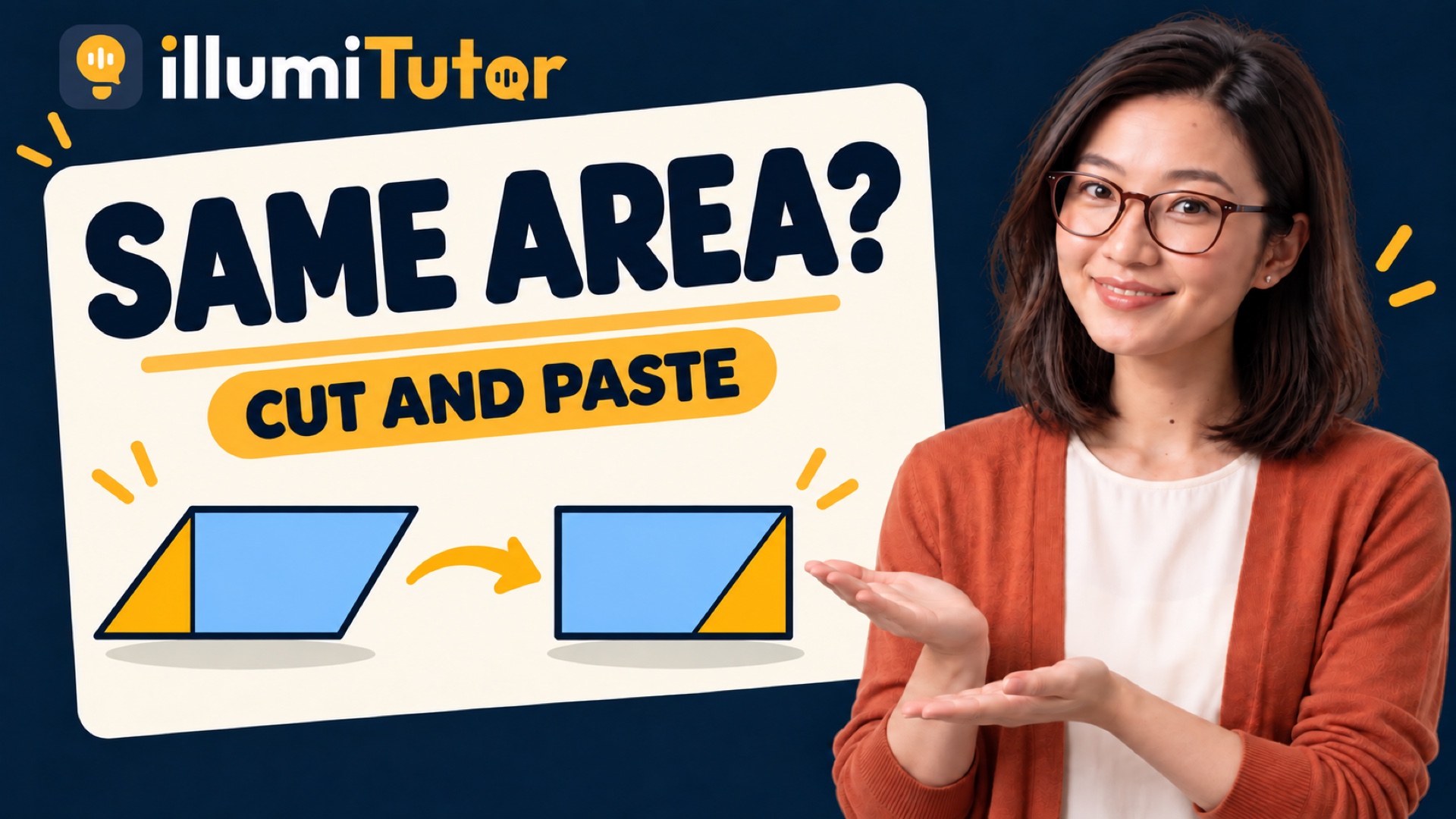
Cut and Paste: Rearrange Shapes to Find Area
A cut-and-paste move turns a slanted parallelogram into a rectangle, making its base and perpendicular height easy to use.
 Measurement & Geometry
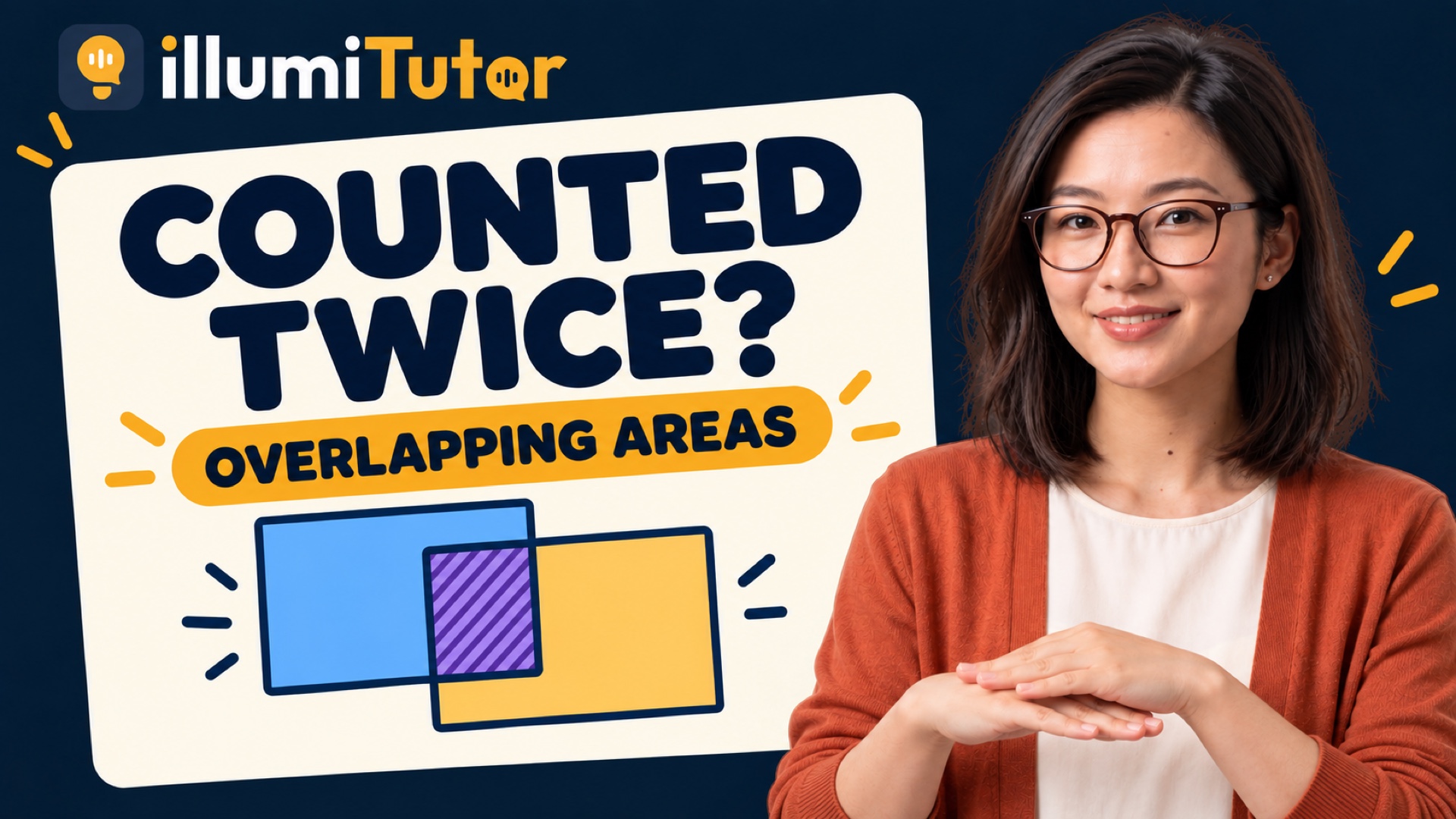
Overlapping Areas: Count the Shared Region Once
When two mats overlap, add both areas and remove the shared patch once so every part of the floor is counted exactly once.
 Measurement & Geometry
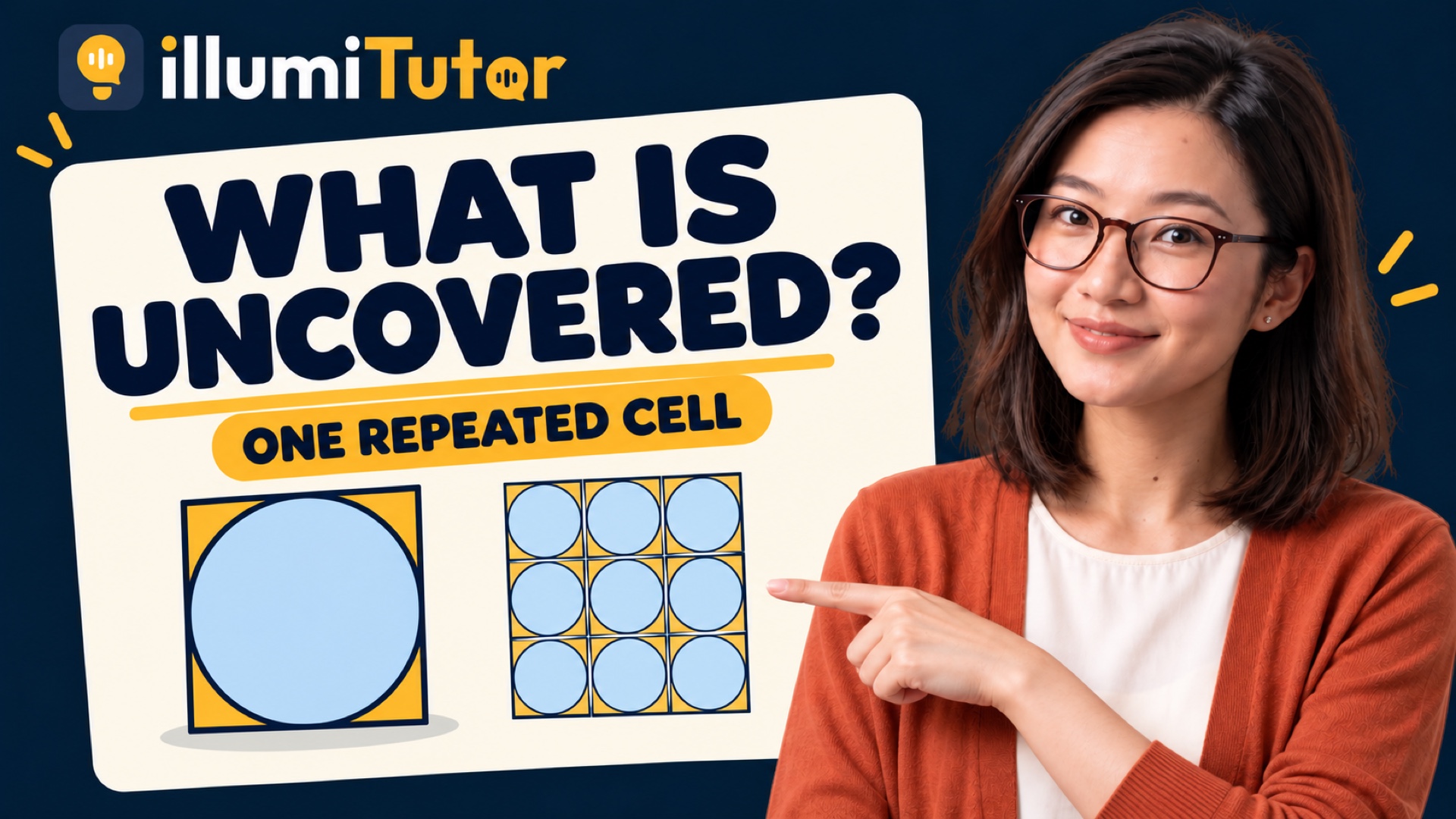
One Repeated Cell: Find the Complement Area
One tile contains a square with a circular cut-out. Find the uncovered part once, then scale it across all the repeated tiles.
 Measurement & Geometry
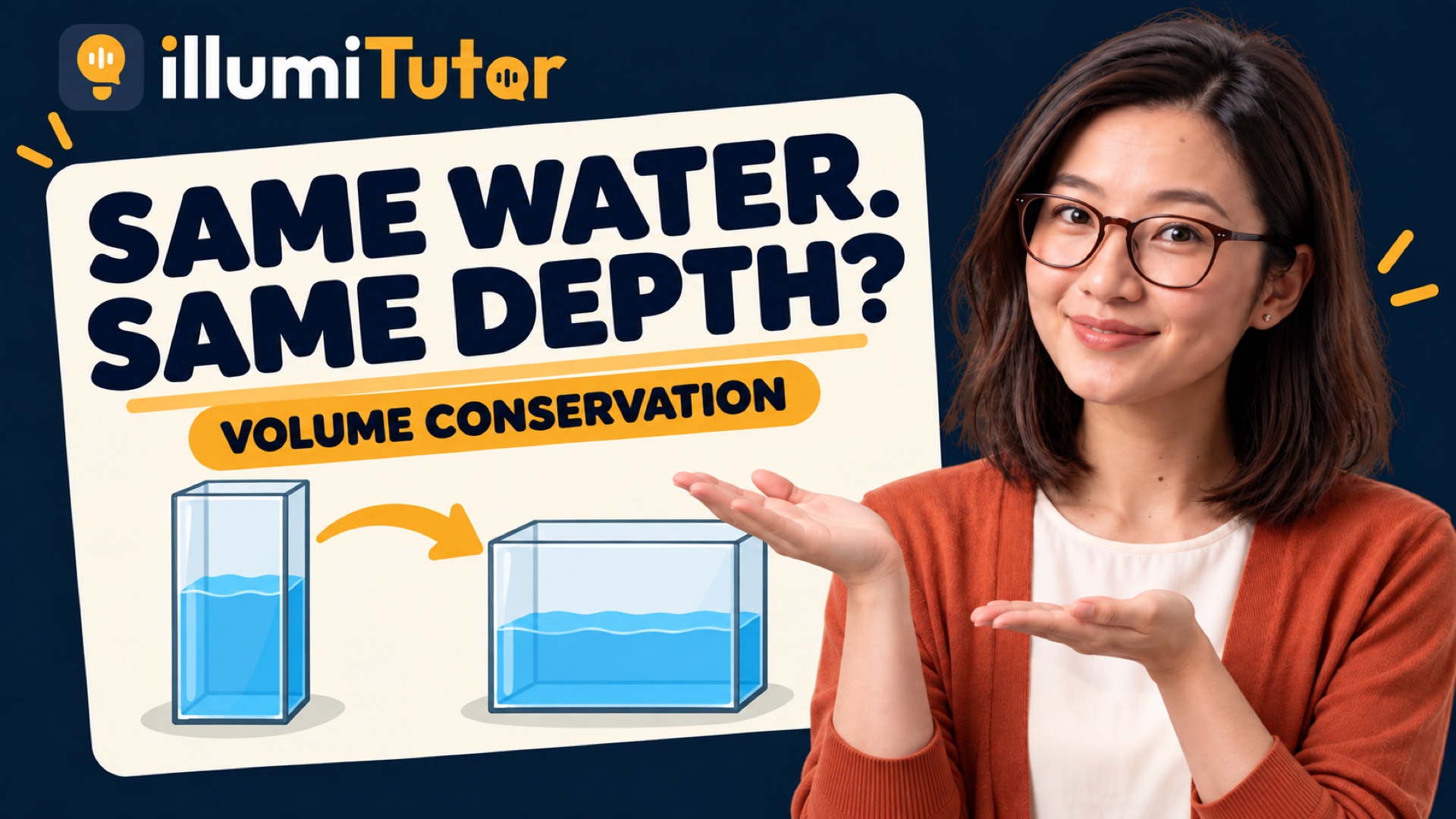
Volume Conservation: Same Water, New Tank
A visual tank transfer makes conservation of volume concrete: the water amount stays fixed while the base area and depth change.
Measurement & GeometryComposite Quadrilateral Angles
A careful P6 method for composite angles: follow the named rays, use the stated shape property, and show each step.
Statistics
2 notesStatisticsReading and Interpreting Data
How to pull the right numbers out of tables, bar graphs, line graphs and pie charts, compare them, and use them to solve word problems.
 Statistics
Average (Mean)
The average formula and its three forms — finding the average, the total, or the number of items — plus word problems where a new value changes the average.