
The Constant-Total Method
A transfer changes the parts, but the whole stays the same.
⏱ 5 min · 🎯 4 things to master
Constant Total Explained with Bar Models | Singapore Primary Maths
Video · 4:33
When something moves from one person to another, the two amounts change but their combined total stays constant. This method keeps the whole visible. Think of a fixed tray of counters: moving counters between two boxes changes the split, never the whole tray.
Parents: ask your child to write the total before and after the transfer. If the transfer stays inside the two people, both totals must match.
By the end, you will be able to spot an internal transfer, find one unit from the change, and check the total before and after.
Keep the whole fixed
An internal transfer has opposite changes: one amount loses what the other gains. A gift from outside, a purchase, or a loss does change the combined total, so use a BCA table to record it first.
🤔 Predict first: Sam gives $12 to Priya. What happens to their combined amount?
Equalise by moving one unit
Priya and Sam have money in the ratio 3 : 5. Sam gives Priya $12, and they then have equal amounts. Find their starting amounts.
After the transfer the eight units are split equally into four units and four units. Priya gains one unit, so one unit is twelve dollars. The original bars are three units and five units.
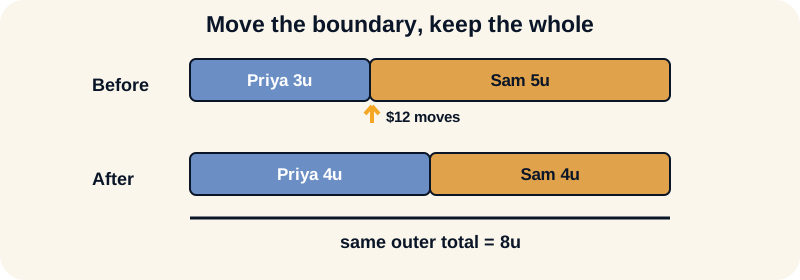
Move the transfer
Predict first: After an internal transfer, what must happen to the combined total?
Find one unit
The total check is twelve dollars transferred within the pair: the starting total and final total are both ninety-six dollars.
Do not confuse constant total and constant part
Constant total describes a transfer between two quantities. Constant part describes a piece that stays unchanged while another piece changes. If the question says a fixed number is removed from each amount, compare the unchanged piece; if it says one amount is given to the other, keep the total fixed.
Practice: transfer inside the pair
1. Red and blue counters are in the ratio 2 : 6. Twelve blue counters move to red, and the amounts become equal. Find the starting amounts and the final amount in each group.
Working
2. Mo and Lin have money in the ratio 1 : 3. Mo receives $18 from Lin and they become equal. Find their starting amounts.
Working
3. Two sticker collections are in the ratio 3 : 7. Nine stickers move from the larger collection to the smaller. The new ratio is 4 : 6. Find the original piles.
Working
Watch out — easily mixed up
Quick recap
🎯 Mastery check
Answer all 6 — your progress is saved on this device.
Sam gives money to Priya from his own amount. What happens to their combined total?
A ratio is 3 : 5 and an internal transfer makes it 4 : 4. How many units move into the smaller part?
If one transferred unit is worth $12, what is a starting part of three units worth?
Which change can make the combined total change?
What should the before and after totals do in a constant-total problem?
What is the safest first step when a transfer is described?
Ready to keep the whole steady? Follow the transfer from one part to the other and let the unchanged total anchor your model.