
The Before-and-After Model (BCA Table)
Write Before + Change = After so every row stays visible and checkable.
⏱ 6 min · 🎯 4 things to master
BCA Table: Who Had How Much Before? | PSLE Maths
Video · 5:11
Some word problems hide the beginning behind a transfer, a gift, a loss, or a change. The Before-Change-After (BCA) table keeps the story in order. A records what each person gains or loses. Write what each person had before, what changed, and what remained after. Then connect the final rows with the clue in the question.
Parents: ask your child to write the signs in the Change row before solving. A minus for the giver and a plus for the receiver makes the story visible.
By the end, you will be able to track a transfer, solve for one unit, and check the Before + Change = After relationship in every row.
Write the three stages
The three columns are Before, Change, and After. A transfer from Asha to Ben is negative for Asha and positive for Ben. The same amount moves, so the signed changes have equal size and opposite signs.
🤔 Predict first: Asha gives money to Ben. Which signs belong in the Change row?
Use the after clue
Asha had $24 more than Ben. She gave of her money to Ben. They then had equal amounts. How much did each have before the transfer?
of Asha’s money is one unit. After giving it away, Asha has three units. Ben receives one unit and therefore has three units after the transfer. His before amount is two units. The original difference gives the value of one unit.
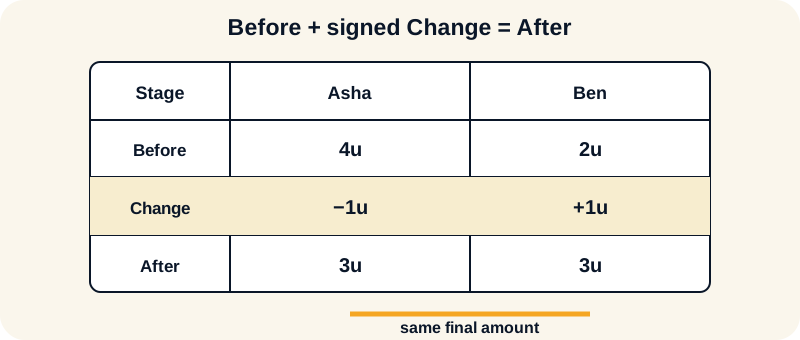
Replay the transfer
Predict first: If Asha gives money to Ben, what happens to their total?
Build the BCA solution
The starting total is seventy-two and the after total is still seventy-two. The transfer changes who has the money; it does not change the total.
BCA also handles outside changes
BCA is broader than a transfer. If Kai gives Lina $6 from his own money, Kai’s Change is negative six and Lina’s Change is positive six. If a person loses $14 outside the comparison, write negative fourteen in that row. Only call the total constant when the change stays inside the two rows.
Practice: complete the table
| Person | Before | Change | After |
|---|---|---|---|
| Kai | $30 | −$6 | ? |
| Lina | ? | +$6 | Same as Kai |
1. Kai has $30 and gives $6 to Lina. They then have the same amount. How much did Lina have before?
Working
| Person | Before | Change | After |
|---|---|---|---|
| Mina | Yusuf + $18 | Gives one fifth | Equal |
| Yusuf | ? | Receives same gift | Equal |
2. Mina has $18 more than Yusuf. She gives of her money to Yusuf, and they become equal. Find their starting amounts.
Working
| Badges | Before | Given away | After |
|---|---|---|---|
| Stars | Three fifths of total | Half of stars | ? |
| Moons | The rest | 14 | ? |
| Total | ? | ? | 42 |
3. A box has star badges and the rest are moon badges. the stars and 14 moon badges are given away; 42 badges remain. How many badges were there at first?
Working
Watch out — easily mixed up
Quick recap
🎯 Mastery check
Answer all 6 — your progress is saved on this device.
Kai gives money to Lina. What sign belongs in Kai’s Change row?
What equation should every BCA row satisfy?
Asha has $48 and Ben has $24. Asha gives of her money to Ben. What relationship holds after the transfer?
What does an internal transfer do to the pair’s combined total?
If a person receives a gift from outside, what should the BCA table show?
What is the best final check for a BCA solution?
Ready to make the story visible? Lay out Before, Change, and After, then let each row balance itself.