PSLE English · 9 min read
PSLE English Cloze: The Three Sections Hiding Under One Name
A mother once slid a spiral notebook across the table to me. Two hundred and forty words, copied out in three colours, each with its definition. "She's memorised all of them," she said. "She still got four out of fifteen for the cloze." I flipped to the marked paper. The words her daughter had missed were make, part, only, risk and for. Not one of them was in the notebook, because not one of them looked hard enough to be worth writing down.
That notebook is the most common mistake in PSLE English cloze, and it comes from an honest misunderstanding. Parents hear "cloze" and picture one skill: fill in the blank. But three different sections in Paper 2 carry that name or something close to it, they test three genuinely different things, and revising for all three the same way leaves marks on the table in all three.
PSLE English cloze is three sections, not one
Paper 2 (Language Use and Comprehension) is the heaviest paper in the subject: 90 marks, 1 hour 50 minutes, 45% of the English grade. Three of its sections are blank-filling, and between them they are worth 30 marks — a third of the paper.
| Section | Where | Marks | What you are given | What you must produce |
|---|---|---|---|---|
| Vocabulary cloze | Booklet A | 5 | A short passage with 5 blanks, four options at each blank | Choose the best option |
| Grammar cloze | Booklet B | 10 | A passage with 10 blanks, plus one lettered list of about 15 words for the whole passage | Choose from the list, each word once |
| Comprehension cloze | Booklet B | 15 | A longer passage with 15 blanks and nothing else | Produce every word yourself |
(Comprehension cloze is also called open cloze; the papers themselves just say "cloze". Alongside these sit the separate 5-mark vocabulary MCQ and the 10-mark grammar MCQ, which are single sentences rather than a passage.)
Look at the last two columns and the difference jumps out. Vocabulary cloze is recognition — the right answer sits on the page under the blank, and the child's job is to eliminate three near-misses. Grammar cloze is selection under pressure — the answer is somewhere in a shared list, but that list serves ten blanks at once, there are more words than blanks, and spending a word on the wrong gap costs you twice. Comprehension cloze is pure recall — nothing is offered at all, so every word has to be generated from the shape of the sentence.
Three different mental actions. A child can be strong at one and weak at another, and an alphabetised word list trains none of them well.
What fourteen years of papers actually show
We went back through the PSLE English papers from 2012 to 2025 — fourteen yearly papers — and captured every cloze answer in them: 475 target answers in total, plus all 500 option appearances in the vocabulary sections. This is our own review of the past papers, not published data. Six things came out of it, and each one changes how you'd revise.
1. The exact words almost never come back. All 125 of 125 vocabulary target answers across those papers are unique. Not one repeats. Open cloze is nearly as unforgiving: 184 of 210 primary answers appear once only. Grammar cloze is the sole exception — 72 of 140 answers are unique, and is, which and as each turn up six times. So if the plan is "learn the words that came out before", the arithmetic says it will not work for two sections out of three.
2. Grammar cloze is a relationship test, not a rules test. Of its 140 answers, 41 were connectors or adverbs, 36 were prepositions or particles, and 24 were reference words — over 70% glue. The question being asked is almost never "do you know a difficult rule?" It's "how are these two ideas connected?" Contrast, cause, time, ownership, quantity.
3. Open cloze prefers ordinary words in demanding places. Make, part, risk, follow, only. The difficulty is fit, not rarity — which is exactly why that mother's daughter, armed with 240 impressive words, walked past only.
4. Collocation beats vocabulary size. A large share of open-cloze answers are plain words locked into fixed partnerships: pay attention to, make use of, take for granted, dispose of. Forty of the 210 open answers were chiefly a partnership. Learning a word with its usual neighbours pays far better than learning it alone.
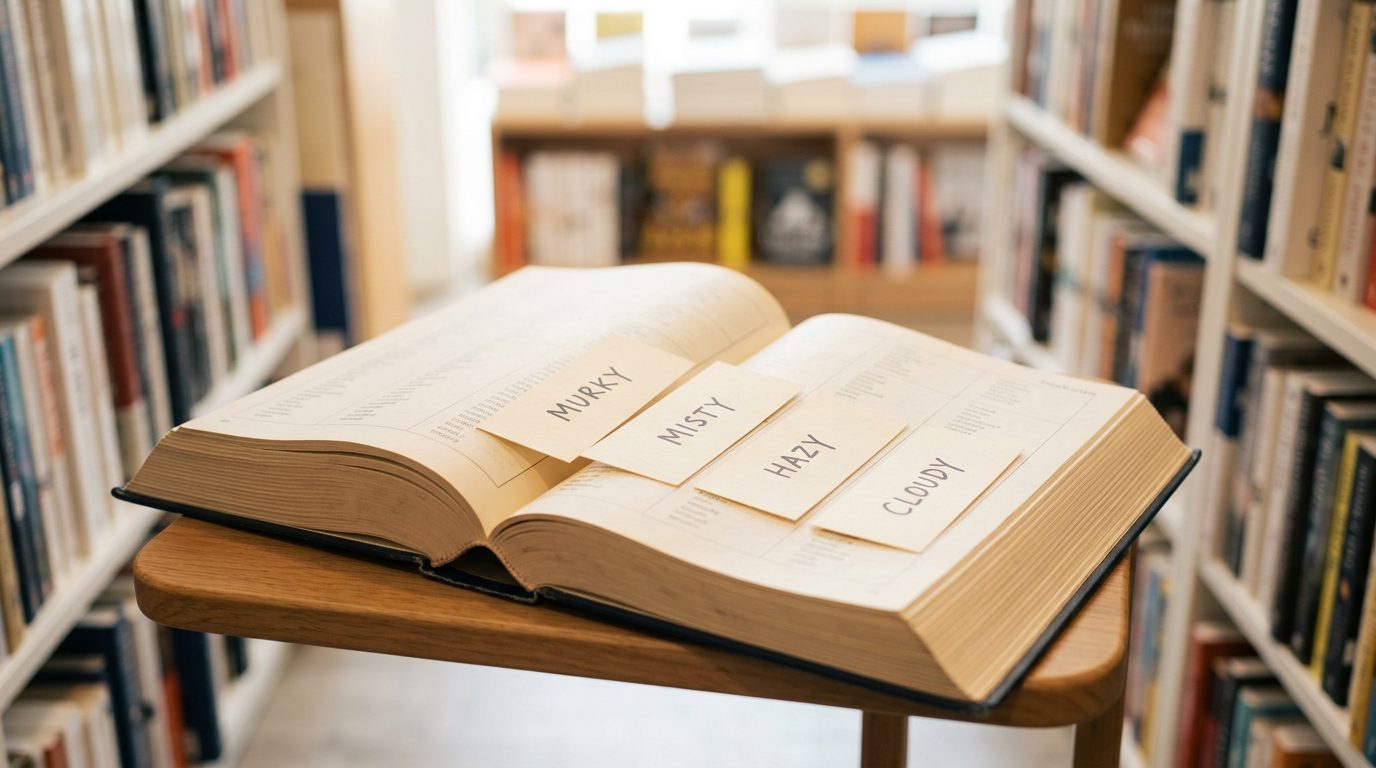
5. Distractors are near-neighbours. In vocabulary cloze the four options usually share a broad meaning and differ in usage — complement and supplement, murky and misty, speculation and suspicion. A dictionary definition will not separate them. The sentence pattern will.
6. The contexts change; the language engine does not. Passages across those fourteen years ran from ants and dung beetles to wet markets and smartphones. The tools tested underneath stayed the same. And when the 2025 paper renumbered Booklet B — grammar cloze moved from Q29–38 to Q26–35, comprehension cloze from Q51–65 to Q46–60 — the language demand did not move at all. Which is the small, practical lesson: teach your child to recognise a section by its instructions and format, never by a memorised question number.
The three checks that solve any blank
The same routine works on all three sections. It just leans on a different check in each.
Check the frame — what kind of word can fit here? Look immediately left and right before you think about meaning at all. Article + blank + noun wants an adjective. A blank after to is either a base verb or a fixed preposition. A blank between two full clauses is a connector. Decide the job first, and half the wrong answers disappear before you've considered them.
Check the message — what must this sentence mean? Read the whole sentence, and for comprehension cloze, the sentence before and after it. You are hunting for a signal: contrast, cause, time, comparison, reference. The stall had queued customers all morning; by noon, however, the shutters were down. That however is not decoration — in a cloze it's the clue that the blank must reverse the direction of the first half.
Check the partnership — do these two words really go together? Say the phrase quietly. Preference for. Refrain from. Contrary to. A word can pass the frame check and the meaning check and still be wrong because English simply doesn't pair it that way. He paid attention on the instructions is a real, common script error. Nothing about it is illogical; it just isn't the partnership.
Common mistakes, and what they look like on a script
Memorising words instead of frames. The 240-word notebook. Fix: for every new word, write the two or three words that live beside it, and one sentence you made up yourself.
Stopping reading at the blank. Children fill the gap using only what came before it. Often the answer is announced by the words after the gap. Train the habit out loud: read past the blank to the full stop before writing anything.
Choosing a word because it matches the topic. The passage is about recycling, so rubbish feels right, and it fits nothing grammatically. Topic-matching is the most seductive wrong method because it feels like comprehension.
Treating "it sounds right" as evidence. Ask your child, on any answer she's unsure of: point to the words that prove it. If she can't underline them, she guessed — and that's a coaching moment, not a scolding one.
Copying the answer into the error log. Writing "Q54 — for" teaches nothing. Writing "I chose although, but a noun phrase followed, so it had to be despite" prevents the next one. Log the reason, not the word.
The 10-second checking loop
After she fills a blank — before she moves to the next one — four quick passes:
- FORM — is the word type and tense right?
- MEANING — does the whole sentence still make sense?
- PARTNERSHIP — do these words naturally go together?
- PASSAGE — does it agree with the sentences around it?
For a blank that won't yield, leave a light pencil mark and come back after reading the whole passage. Later sentences hand over clues that earlier ones withheld — that is by design in comprehension cloze, and it's the single easiest mark to reclaim.
What to do this week
Pick one recent paper. Have her attempt all three cloze sections untimed, then sit with her and tag every error with one letter: F (form), M (meaning), C (collocation), R (missed reference or context). Twenty minutes of tagging tells you more than another six papers will, because the letter that keeps repeating is the section she should actually be revising.
Then go deeper on whichever one it is. We've written a post on each: grammar cloze, which is really a test of how ideas connect; comprehension cloze, and the habit of reading through the blank; and vocabulary cloze, where all four options look right on purpose.
Worth knowing where these 30 marks sit in the whole grade — our PSLE 2026 marks and paper breakdown lays out every paper. And since the rest of Booklet B runs on the same machinery, the same week is a good time to look at synthesis and transformation and open-ended comprehension.
One last thing for the notebook. Don't throw it away — reorganise it. Same words, but each one written inside the phrase it lives in, with a sentence she wrote herself underneath. That notebook will earn marks. The alphabetised one never did.
Keep learning
Related PSLE guides
The Word Patterns That Decide PSLE English: From Editing Traps to Vocab Cloze
Why memorising random vocabulary lists fails upper-primary students, the word families that actually cost marks in Paper 2, and how to practice them actively.
7 Sept 2026 · 10 min read
PSLE Vocabulary Cloze: Why All Four Options Look Right
The vocabulary options are near-neighbours separated by usage, not meaning. Why memorising definitions is the wrong drill, and what to do instead.
20 Aug 2026 · 14 min read
PSLE Grammar Cloze: 10 Marks That Are Really a Relationship Test
Almost every grammar cloze blank is a glue word. Teach your child to read the shape of the sentence on both sides of the gap, and the guessing stops.
6 Aug 2026 · 10 min read
PSLE Comprehension Cloze: How to Read Through the Blank
Why strong readers leak marks in the open cloze, and the three-pass routine that replaces "it sounds right" with evidence you can point at.
13 Aug 2026 · 11 min read