Exam Strategy · 10 min read
PSLE 2026 Marks: What Each Paper Is Really Worth
A mother showed me her son's marked Science paper last year, genuinely upset. "Teacher, he only got two multiple-choice wrong. Two! How come his marks dropped so much?" I looked at the script. He'd lost four marks on those two questions — not two — and a chunk more on an "explain" question he thought he'd answered. To her, two ticks missing felt like two marks. To the paper, it was a much bigger hole.
That gap — between how parents imagine the marks are spread and how they're actually spread — is one of the most common blind spots I see. Once you know what each PSLE 2026 paper is worth, and where the heavy marks sit inside it, you stop worrying about the wrong things and start aiming effort where it pays.
So here's the honest map of the marks, subject by subject, for the current format.
How the marks add up to a grade
First, the big picture, because it trips people up. Each of the four subjects is scored out of 100 and then placed into an Achievement Level from AL1 (best) to AL8. If the AL bands themselves are still fuzzy for you, I've written a separate plain-English walkthrough of how the PSLE AL scoring system works — read that alongside this one.
What matters here is the layer underneath that final mark: the papers. A subject isn't one exam. It's several papers, each carrying a fixed share — a weighting — of that out-of-100 total. A child can be strong on the paper that's worth a little and weak on the paper that's worth a lot, and the report card will look worse than the parent expects. The weighting is where you should look first.
These figures come from the official subject formats published by the Singapore Examinations and Assessment Board (SEAB's PSLE 2026 formats page lists the syllabus document for every subject). I'd encourage you to glance at the real document for your child's subjects — it's short, and it's the source of truth.
PSLE 2026 marks for English
English is the subject parents most often misjudge, because it's spread across four papers and the talking ones count for more than they think.
| Paper | What it is | Marks | Weighting |
|---|---|---|---|
| Paper 1 | Writing (situational + composition) | 50 | 25% |
| Paper 2 | Language Use & Comprehension | 90 | 45% |
| Paper 3 | Listening Comprehension | 20 | 10% |
| Paper 4 | Oral Communication | 40 | 20% |
Look at Oral: 20% of the whole subject sits in a fifteen-minute conversation and a reading-aloud passage. That's a fifth of the grade, and it's the paper families practise least because it doesn't come in an assessment book. Reading Aloud is 15 marks, the Stimulus-Based Conversation is 25 — and a child who mumbles through the picture discussion is leaving real marks on the table.
Paper 2 is the giant at 45%, and it's really nine smaller sections stitched together. Here's how the 90 marks are split:
| Booklet | Section | Marks |
|---|---|---|
| A (MCQ) | Grammar | 10 |
| A (MCQ) | Vocabulary | 5 |
| A (MCQ) | Vocabulary Cloze | 5 |
| A (MCQ) | Visual Text Comprehension | 5 |
| B | Grammar Cloze | 10 |
| B | Editing (Spelling & Grammar) | 10 |
| B | Comprehension Cloze | 15 |
| B | Synthesis & Transformation | 10 |
| B | Comprehension (Open-Ended) | 20 |
The marks are scattered across many small items: the grammar and comprehension cloze passages give roughly 1 mark per blank, editing is 1 mark per error, and synthesis & transformation is 2 marks per sentence you rewrite. The open-ended comprehension at the end is worth up to 20 marks on its own. None of these is dramatic alone, but they add up fast, and a child who rushes the cloze to "save time" for the comprehension is often trading 1-mark blanks they could nail for 2-mark questions they'll only half-answer.
PSLE 2026 marks for Mathematics
Maths is the cleanest to read, because the marks rise with the question number.
| Paper | Calculator? | Marks | Weighting |
|---|---|---|---|
| Paper 1 (Booklets A + B) | No | 45 | 45% |
| Paper 2 | Yes | 55 | 55% |
Paper 1 has two booklets. Booklet A is multiple choice (20 marks); Booklet B is short-answer (25 marks). The pattern is worth knowing: the early questions are 1 mark each, the later ones 2 marks each. In Booklet A the first ten are 1 mark and questions 11–15 are 2 marks; in Booklet B the first five are 1 mark and the rest are 2.
Paper 2 is the heavier paper — 55% — and it's where the long, structured problem sums live. The first few questions are 2 marks each; after that they climb to 3, 4 and 5 marks as the problems get longer and need full working shown.
This is why a careless 5-mark problem sum in Paper 2 hurts so much more than a 1-mark question in Booklet A. Same single mistake, very different cost.
PSLE 2026 marks for Science
Science changed for 2026, and the change matters for how you read a marked paper. It's one paper, 100 marks, split into two booklets.
| Booklet | What it is | Questions | Marks | Weighting |
|---|---|---|---|---|
| A | Multiple choice | 30 | 60 | 60% |
| B | Open-ended | 10–11 | 40 | 40% |
Here's the part that surprised the mother I mentioned at the start: every Science multiple-choice question is worth 2 marks, not 1. Thirty questions, two marks each, sixty marks — that's 60% of the subject decided by the MCQ section alone. So two "small" careless MCQ slips aren't minus two. They're minus four. Suddenly her son's drop made sense.
Booklet B is the open-ended section — the "explain", "suggest", "state two reasons" questions. Each question is worth somewhere between 2 and 5 marks, usually broken across parts (a), (b) and (c). The marks here reward precise reasoning, not just a correct gut feeling. A child who knows the answer but writes it loosely — naming the effect but not the cause, or giving one reason when the question asks for two — drops marks that, on paper, looked safe. I've written more about exactly where marks leak in Science open-ended questions if that's your child's weak spot.
PSLE 2026 marks for Mother Tongue
Chinese, Malay and Tamil all share the same structure at the Standard level, and the split looks like this:
| Paper | What it is | Marks | Weighting |
|---|---|---|---|
| Paper 1 | Writing | 40 | 20% |
| Paper 2 | Language Use & Comprehension | 90 | 45% |
| Oral | Reading aloud + conversation | 50 | 25% |
| Listening | Listening Comprehension | 20 | 10% |
Notice the pattern repeating from English: the Oral is worth a full 25% — reading aloud (20 marks) plus the video-based conversation (30 marks) — and it's the component children practise least.
Paper 2 carries the same 45% weight as it does in English. Its sections break down like this:
| Section | Type | Marks |
|---|---|---|
| Language Use (语文应用) | MCQ | 30 |
| Cloze Passage (短文填空) | MCQ | 10 |
| Comprehension 1 (阅读理解一) | MCQ | 10 |
| Complete the Dialogue (完成对话) | MCQ | 8 |
| Comprehension 2 (阅读理解二) | Open-ended | 32 |
Here, every multiple-choice item is worth 2 marks — so the bulk of Paper 2 is decided two marks at a time, and a careless slip in the language-use section costs the same as one in comprehension. The open-ended Comprehension 2 questions vary from 1 to 4 marks depending on how much thinking they ask for.
Common mistakes parents make about the marks
Treating every question as one mark. A decade of "10 questions, 10 marks" primary-school worksheets builds the wrong instinct. At PSLE, a single Science MCQ is 2 marks and a single Maths problem sum can be 5. Where the mistake happens decides how much it costs.
Drilling the cheap paper and ignoring the expensive one. Endless MCQ practice feels productive because you can mark it fast. But in English and Mother Tongue, a quarter of the grade is Oral — and almost nobody rehearses it. Match your effort to the weighting, not to what's easy to mark at the kitchen table.
Reading only the score in the corner. "42 out of 50" tells you nothing about which marks were lost. Pull the paper apart: were they the 1-mark blanks or the 4-mark explain questions? Careless slips or genuine gaps? Those are completely different problems with completely different fixes.
Forgetting the talking papers exist. Oral and Listening together are 30% of English and 35% of Mother Tongue. They don't come home in a stack of practice papers, so they quietly fall off the radar — and then a confident reader loses marks simply because no one ever sat across from them and practised the conversation.
What to do this week
Take one of your child's recent marked papers and do something most parents never do: write the marks lost next to each section. Not the total — the breakdown. Two marks gone in the MCQs, five in the open-ended, three on a problem sum. Seeing it laid out tells you instantly whether the issue is careless errors on heavy questions or shaky understanding on a topic.
Then pick the one paper that carries the most weight and is leaking the most marks, and aim there. If it's English Paper 2, that might mean slowing down on the cloze instead of rushing to the comprehension. If it's the Oral nobody's been practising, ten minutes of real conversation a few evenings a week will do more than another silent practice paper. And if you want to understand the official splits yourself, the SEAB syllabus documents for each subject are the place to read them straight from the source.
Marks aren't spread evenly, so your effort shouldn't be either.
Keep learning
Related PSLE guides
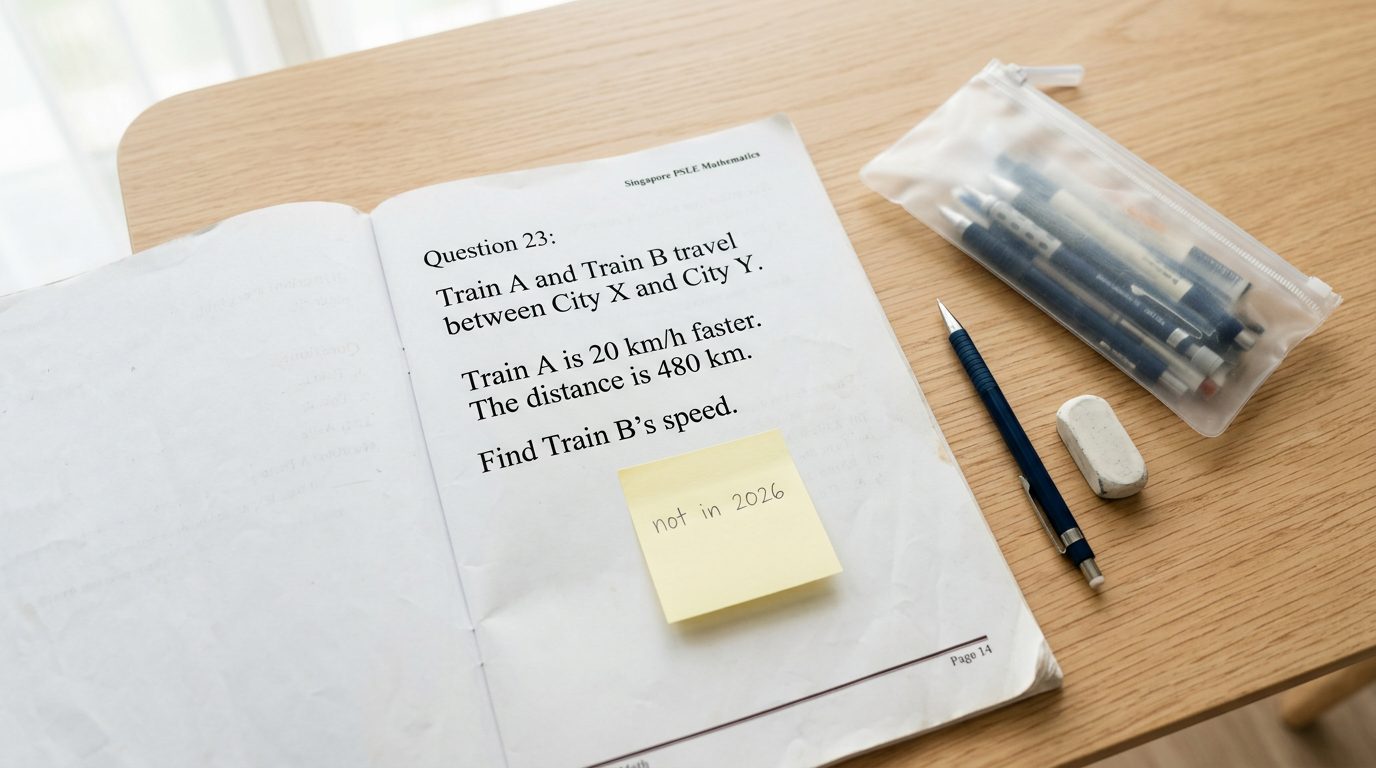
PSLE 2026 Syllabus Changes: What to Watch For When Practising Older Papers
Your child's past-year papers were written for the old syllabus — here is what to skip, what just moved levels, and how the 2026 format differs, subject by subject.
27 Jun 2026 · 9 min read
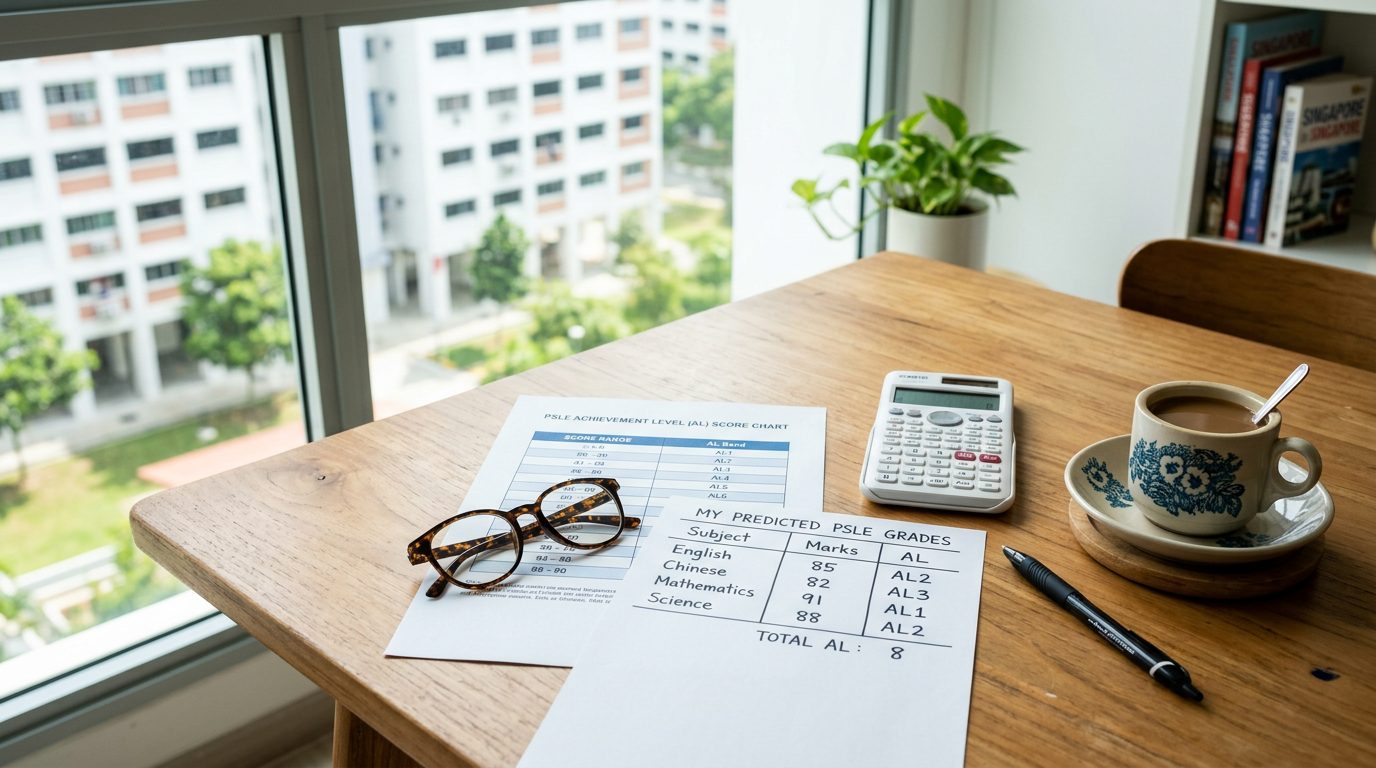
The PSLE AL Scoring System, Explained for Parents
What the AL bands actually mean, how the score of 4 to 32 is built, and the misreadings that quietly worry parents every results day.
9 Jan 2026 · 8 min read

PSLE Exam Week: What to Do the Night Before Each Paper
A teacher's night-before-and-morning-of routine for PSLE exam week — what to pack, light review not cramming, sleep, breakfast, arriving early, and staying calm paper to paper.
8 Sept 2026 · 10 min read
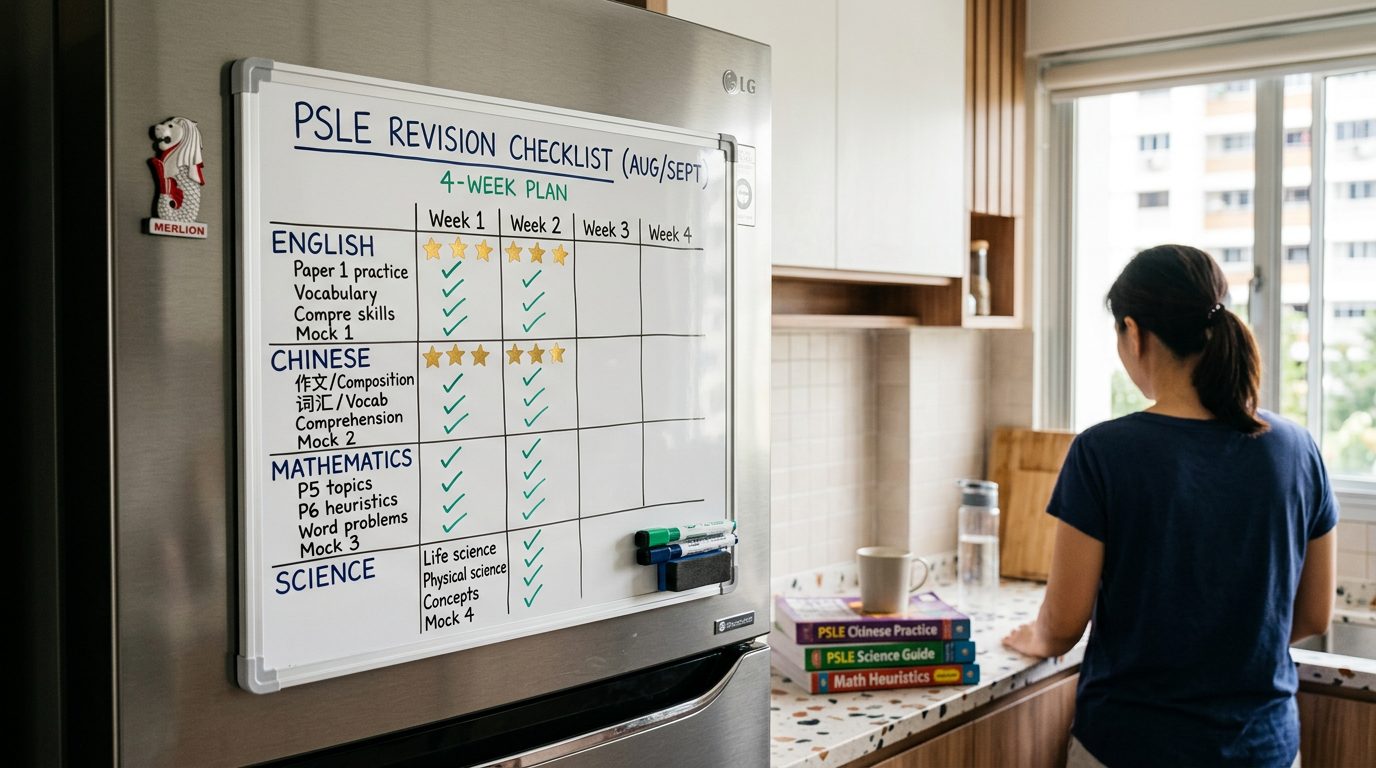
The Final 4 Weeks: a Subject-by-Subject PSLE Checklist
With orals done and the written papers weeks away, this is consolidation season, not new-content season. A subject-by-subject checklist for the last month — and the band-boundary targeting that actually moves a score.
1 Sept 2026 · 10 min read