Exam Strategy · 10 min read
PSLE Exam Week: What to Do the Night Before Each Paper
The hardest part of PSLE exam week is rarely the maths. It's the night before, when a child who has done a year of work suddenly can't remember whether the calculator is charged, where the clear water bottle went, and whether tomorrow is Paper 1 or Paper 2. A parent emailed me the evening before the first paper once, at half past ten, asking if her son should do "just a few more Science questions before bed". The honest answer was no — he should pack his bag, brush his teeth, and go to sleep. The marks were already in him. The job that night was to make sure nothing got in their way.
PSLE exam week runs over several papers across several days, subjects spread out rather than crammed into one sitting. That spacing is a gift and a trap — a gift because nobody has to do everything in one morning, a trap because each evening becomes a small decision: wind down, or wind yourself up. What follows is the routine I'd give any family for the night before and the morning of each paper — the unglamorous logistics that quietly protect the score.
Pack the bag the night before, not the morning of
Do this the evening before every paper, while everyone is calm, and you remove the single biggest source of morning panic. A child rummaging for an eraser at 7am is a child whose heart rate is already up before they've left the house.
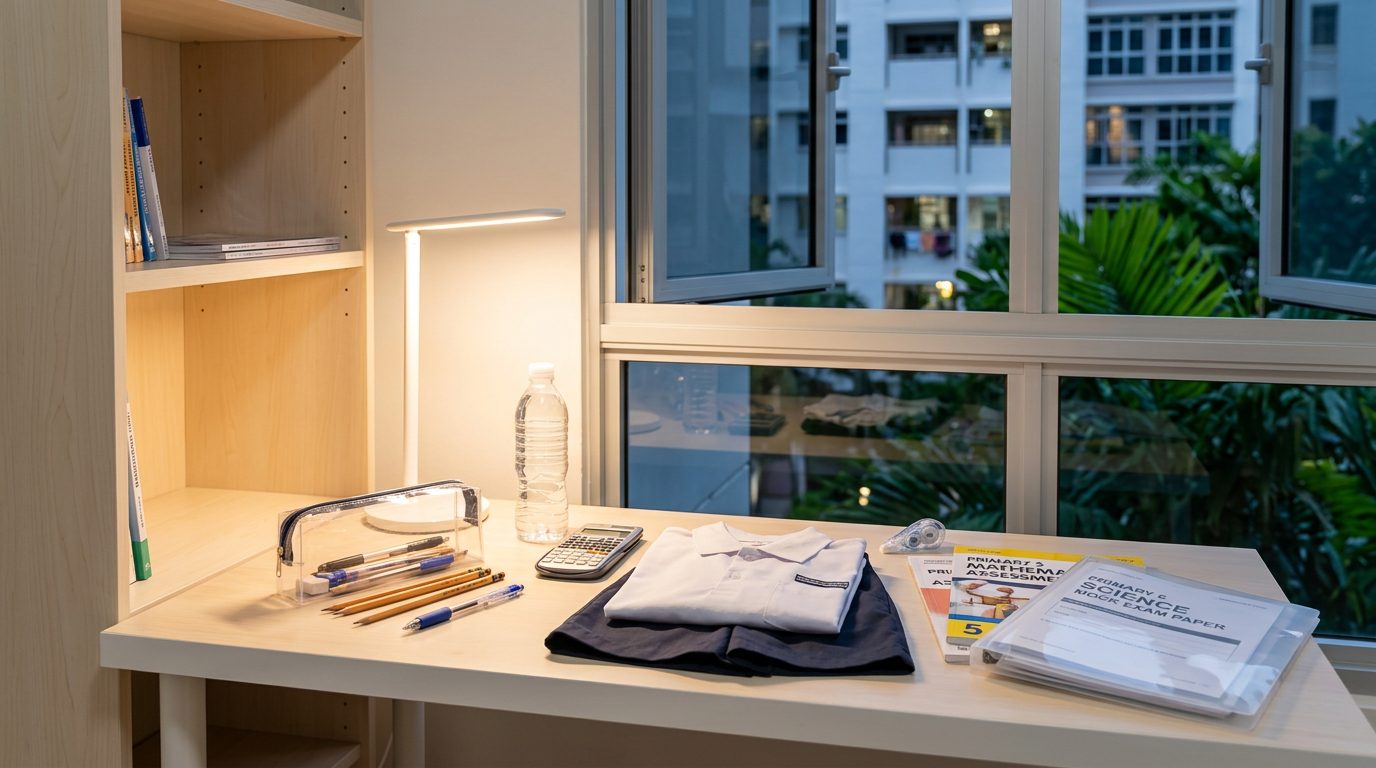
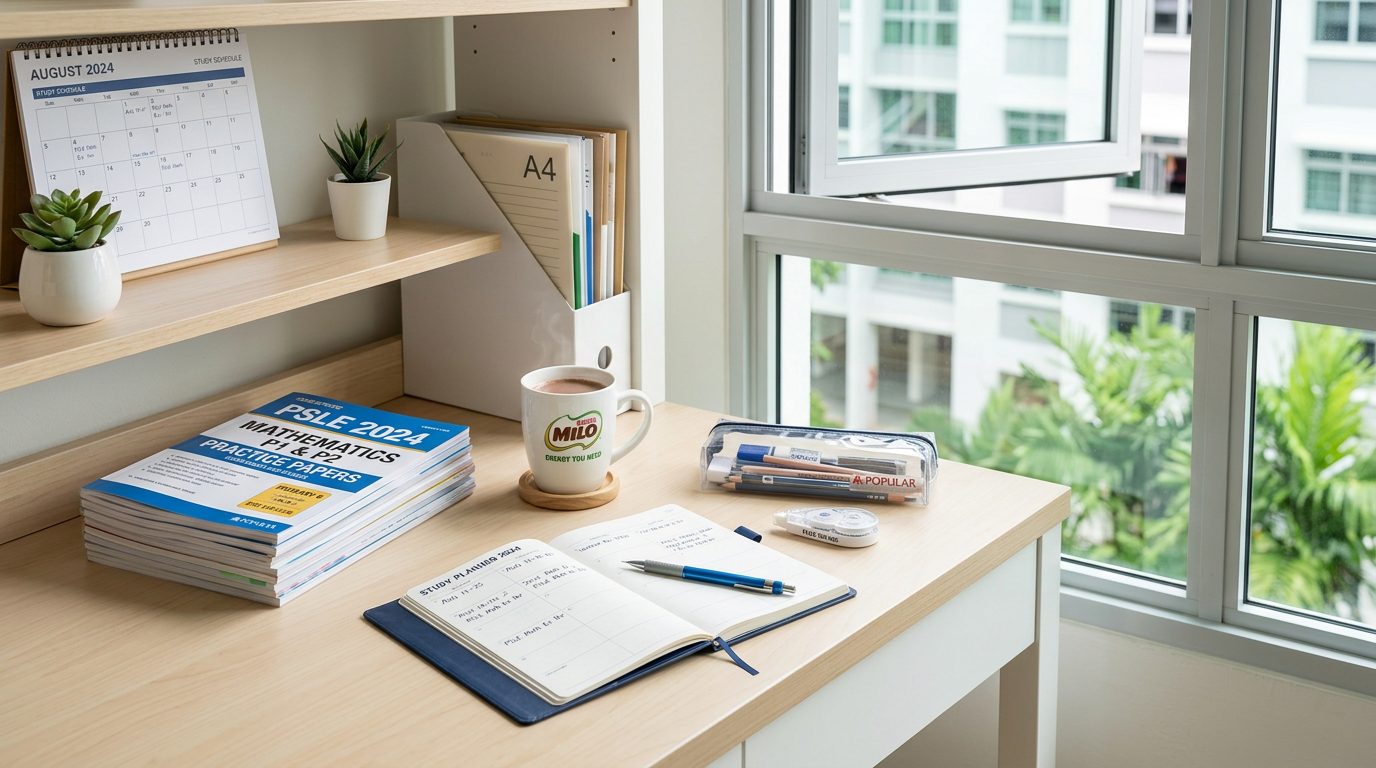
Lay it all out on the desk and pack it together. Schools send home their own instructions on exactly what's allowed and what to bring — follow that letter over anything here — but the usual kit is:
- Stationery in a clear case, with backups: two or three sharpened 2B pencils, a couple of erasers, a sharpener, and the ballpoint pen the child writes well with. A pencil that breaks mid-paper shouldn't cost two minutes of composure.
- The calculator — for Maths Paper 2 only. Paper 1 is done without one. It must be an SEAB-approved model, and the school will have checked it and stuck an approval sticker on it beforehand; make sure that sticker is still on. Test it switches on the night before, and change an old battery now rather than discovering it's dead in the hall.
- A clear, unlabelled water bottle, filled. Regulations want it see-through with the label off. A slightly dehydrated brain is a slower brain, and a sip between questions is also a small, legal way to pause and reset.
- Identity and exam documents as the school instructs — student pass, admission or entry slip, whatever they've asked for. Into the bag the night before, so they can't be forgotten in the rush.
- A plain analogue watch, if your child uses one — not a smart watch, which isn't allowed. Knowing the time without craning at the wall clock helps with pacing.
Phones and smart watches stay home, or get handed in — every year a child is rattled at the door over a device they forgot they were carrying. Sort that the night before too.
Light review, not a fresh paper
Here's where good intentions do harm. The night before a paper is not the time for a timed practice paper or a brand-new question type. A fresh paper at 9pm that goes badly will rattle a child far more than it could ever help them, and it leaves the mind racing at bedtime instead of slowing down.
If your child wants to look at anything, keep it light and reassuring: a glance over their own summary notes, the formula list, a few keywords for Science "explain" questions, the units they keep forgetting. Reading over things they already know steadies the nerves — it's a reminder of how much is in there, not a hunt for what's missing. Twenty or thirty quiet minutes, then close the books.
What you're protecting is sleep, and sleep is where the day's revision actually gets filed. A tired brain stores and retrieves less and makes more careless slips — exactly what you least want walking into the hall. So hold a normal bedtime: screens away half an hour before lights-out, a calm wind-down, and a comforting dinner they like rather than something heavy that sits badly. One good night won't undo a fortnight of short ones, but it will help — so give them the chance to get it.
The morning of: unhurried beats early-and-frantic
Wake early enough that nobody is rushing. The aim of the morning isn't to squeeze in last revision — it's to arrive at the desk calm, fed, and on time.
Breakfast matters more than parents expect. Something with protein and a slow-release carbohydrate — eggs, porridge, wholemeal toast, a banana — keeps a child's energy steady through a long paper. The sugary cereal or the sweet drink gives a quick lift and then a slump halfway through, right when they need to concentrate. A glass of water on waking helps too.
Leave with time to spare. Arriving early lets a child settle, find their seat, visit the toilet, and let their breathing come down before the paper starts, rather than sliding in flustered as instructions are read. The child who's been sitting quietly for ten minutes is in a completely different state from the one who ran from the car park.
Paper by paper: a small reset before each one
Each paper deserves its own clean start. Before the booklet opens, a child can do more for their score in thirty seconds than in any last-minute glance at notes: a few slow breaths to bring the heart rate down, then read the instructions properly — how many questions, how many marks, how long.
The single most useful in-paper habit is also the calmest one: if you're stuck, move on and come back. A child who sits frozen on question 12 for four minutes hasn't just lost those four minutes — they've lost the calm to do questions 13 to 20 well. Flag it, skip it, keep the pen moving, return at the end. Pace is a skill, and it's the one that turns "I knew all of it" into marks on the page.
Remind your child, gently, that each paper is its own day. Maths Paper 1 doesn't decide Paper 2; a wobbly composition doesn't decide the comprehension. The booklet in front of them is the only thing that can earn marks right now — the others are either done or not yet here.
Don't hold the post-mortem
This is the one I'd underline. The moment a paper ends, children gather and compare answers — "What did you put for the last one?", "How many marks was the graph?" — and within five minutes half of them have convinced themselves they've failed a paper they actually did fine on. It changes nothing about the marks already written, and it can wreck the next paper.
Decide as a family, before exam week starts, that finished papers are closed. When your child comes out, the questions are "Did you finish? Did you check your work? Are you hungry?" — not "How did it go, what did you get for question 5". If they're upset about a question, hear them once, then draw a line: it's done, the marks are decided, the only paper that matters now is the next one. A child who isn't carrying the imagined disaster of the last paper walks into the next one with a clear head — which is worth more than any answer you could reconstruct over lunch.
There's a fuller version of how to keep the whole final stretch steady — sleep, routine, and keeping your own nerves out of the room — in our guide to managing PSLE exam stress in the final weeks.
Common mistakes during exam week
Packing the bag in the morning. A last-minute hunt for an eraser or a missing slip starts the day with the child already flustered. Pack the night before, when everyone is calm.
Bringing the wrong calculator, or no calculator, for Maths Paper 2. It has to be an SEAB-approved model with the school's approval sticker, and only Paper 2 uses it. Check it switches on and the sticker's still there the night before.
Doing a fresh timed paper the night before. A bad practice score at bedtime rattles a child and keeps them up. Light review of their own notes only — then sleep.
Trading sleep for a few more questions. Sleep is when the day's learning gets consolidated. A tired brain makes more careless slips, which is the last thing you want in the hall.
A sugary breakfast, or none. The quick lift and crash hits right in the middle of a long paper. Protein and slow carbs hold energy steady.
Freezing on a hard question. Four minutes stuck on one question costs the calm to do the easy ones that follow. Skip it, keep moving, come back at the end.
Holding the post-mortem. Comparing answers after a paper convinces children they've failed when they haven't, and it poisons the next paper. Finished papers are closed.
A calm routine for exam week
You don't need a complicated plan for these few days — just the same small routine, repeated, so nobody has to think hard when they're tired or nervous.
Each evening: pack tomorrow's bag together while your child showers — stationery and backups, the water bottle filled, the calculator checked if tomorrow's a Maths Paper 2, the documents the school asked for. Let your child glance over their own notes for twenty quiet minutes if they want, then close the books, eat a comforting dinner, and keep a normal bedtime.
Each morning: wake early enough to be unhurried, eat a real breakfast with protein and slow carbs, a glass of water, and leave with time to settle before the paper. Before each paper, a few slow breaths and a proper read of the instructions; during it, if stuck, move on and come back.
And after each paper: no post-mortem. Refill the bottle, re-sharpen the pencils, and reset for the next one. The child who arrives rested, packed, and not carrying yesterday's paper is already ahead — and so is the parent who got the kit ready the night before instead of at the door. The work of finding where marks still leak belongs to the weeks before, not the night before: our last 100 days revision plan lays out how to spend the run-in so that exam week is just execution.
Keep learning
Related PSLE guides
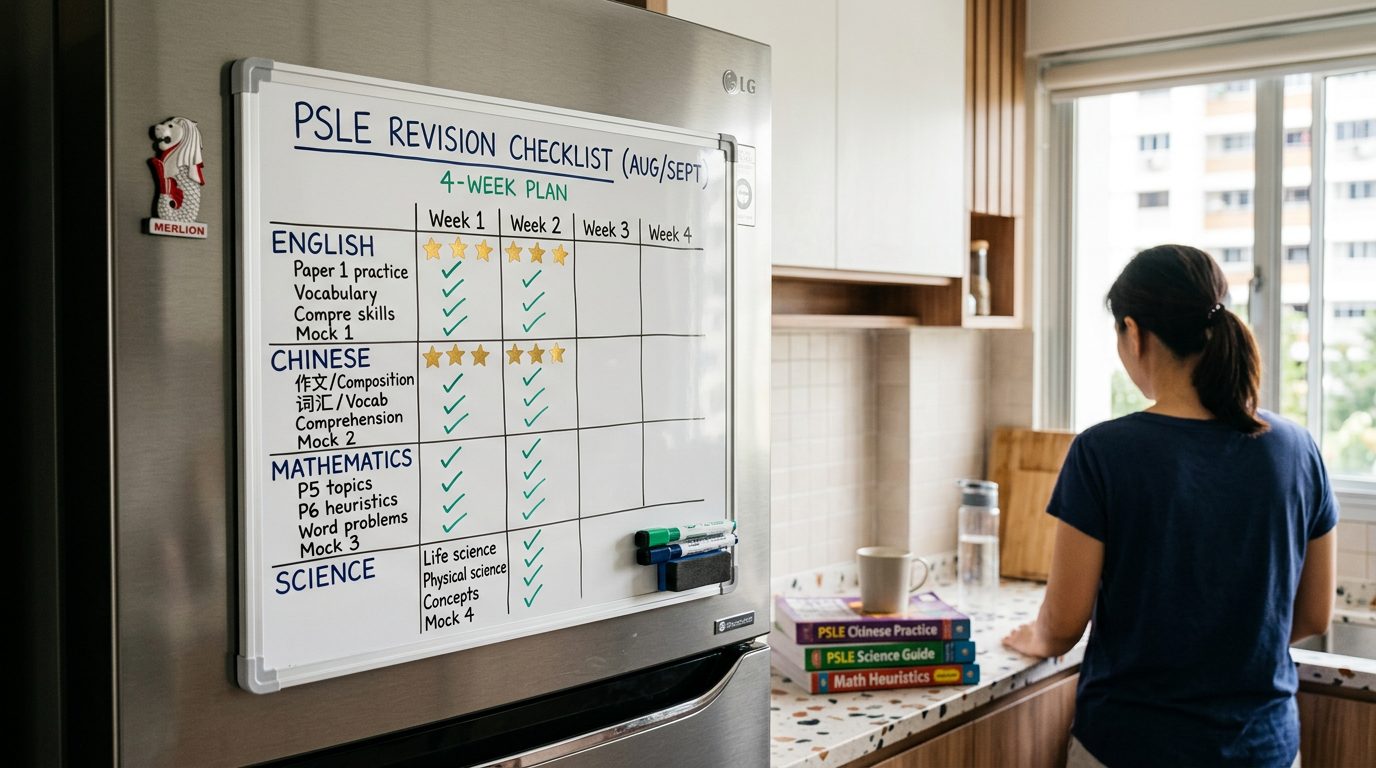
The Final 4 Weeks: a Subject-by-Subject PSLE Checklist
With orals done and the written papers weeks away, this is consolidation season, not new-content season. A subject-by-subject checklist for the last month — and the band-boundary targeting that actually moves a score.
1 Sept 2026 · 10 min read
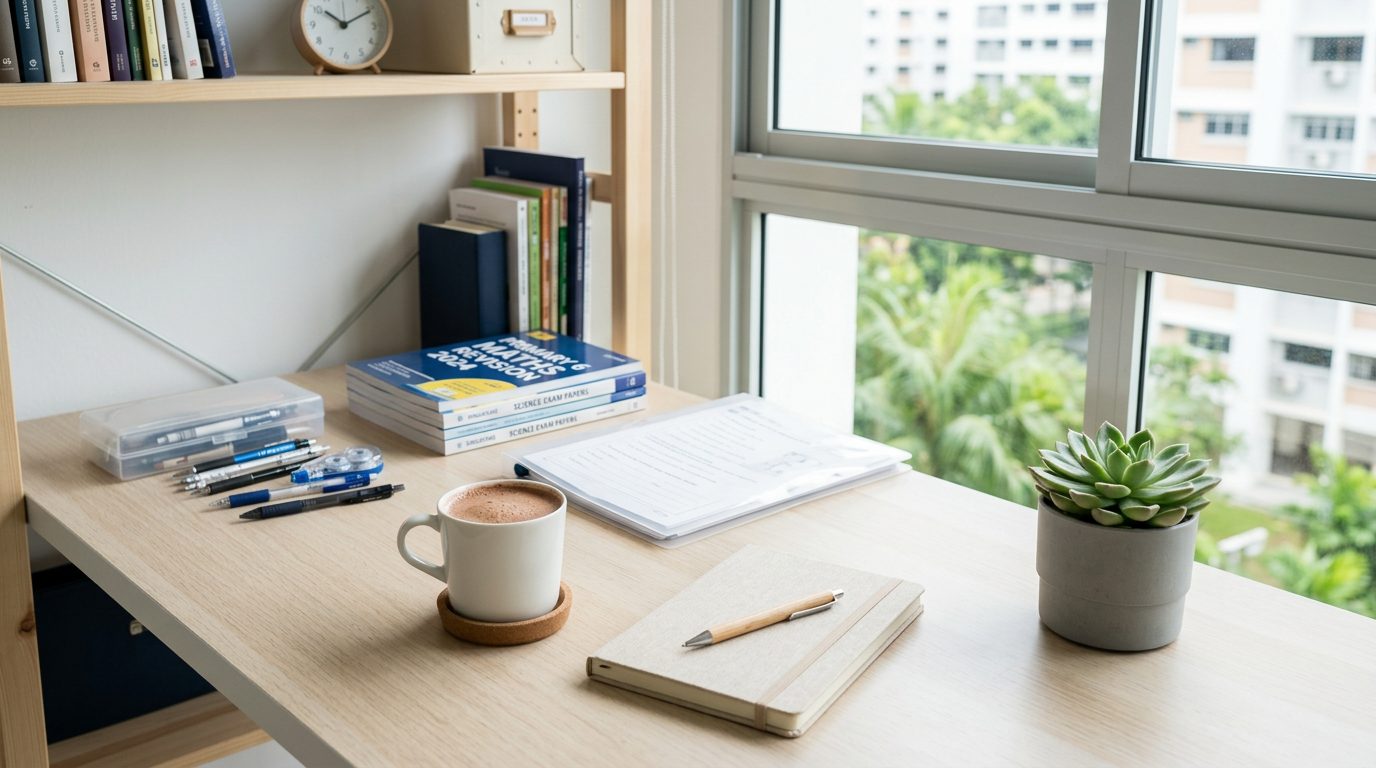
Managing PSLE Exam Stress: a Calm Final-Stretch Plan
How to keep your child — and yourself — calm in the last few weeks before the PSLE: sleep, routine, realistic expectations, and the signs that worry has tipped past normal nerves.
18 Aug 2026 · 10 min read
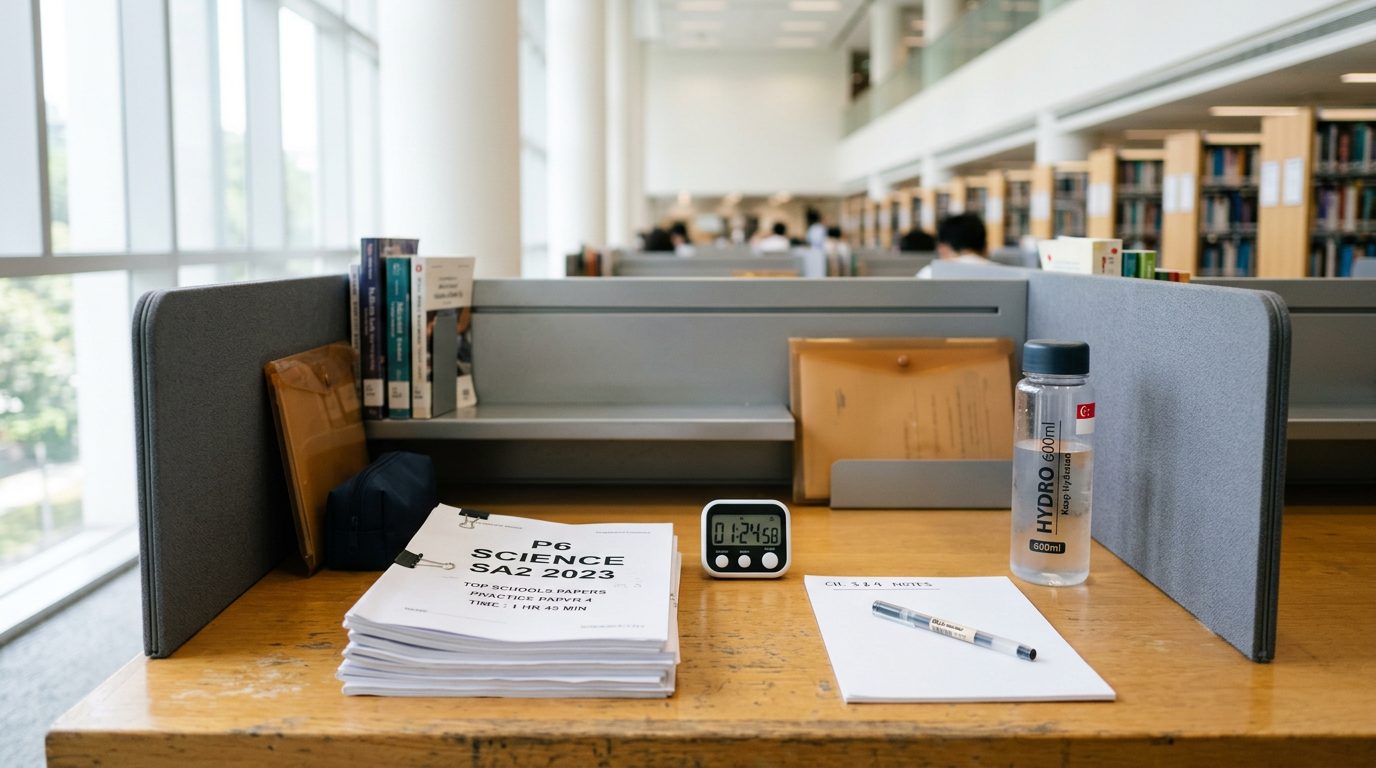
How to Use PSLE Past-Year Papers Properly
Most families do papers the way that feels productive and learns the least. Here's how to use PSLE past-year papers so each one is worth three sittings, not one.
30 Jun 2026 · 10 min read
The Last 100 Days: a Realistic PSLE Revision Plan
A calm, week-by-week plan for the final stretch — diagnosing weak topics, using past-year papers properly, and protecting sleep through orals and the written papers.
19 May 2026 · 9 min read