
Exam Strategy · 9 min read
The Last 100 Days: a Realistic PSLE Revision Plan
Around the middle of the year, the same parent arrives at my door with the same worry. The child has a shelf of assessment books, a tuition timetable that would tire an adult, and a folder of half-finished past-year papers. "Teacher," the parent says, "we are doing so much — why does it feel like nothing is sticking?" The honest answer is usually that they are doing a great deal, but very little of it is the right thing, done in the right order.
That's what a PSLE revision plan is for. Not more hours — better-aimed ones. With roughly a hundred days left, you have enough time to fix real weaknesses and not nearly enough to waste on busywork. The plan below is the one I'd give a parent across the table: humane, specific, and built around how the exam actually unfolds.
Know how the exam year actually unfolds
Before you plan the weeks, picture the shape of the season, because it changes what "the last stretch" means. The PSLE doesn't happen on one day — it's spread across several weeks, and the language papers start earlier than most parents expect.
Broadly, the sequence runs like this:
- Oral examinations — around mid-to-late August. Reading aloud and a stimulus-based conversation, for English and Mother Tongue.
- Listening Comprehension — around mid-September. English and Mother Tongue, usually on a single day.
- Written papers — late September into early October. The four subjects, spread across about a week.
The practical upshot: the oral and listening components arrive before the written papers, so your last weeks of preparation for English and Mother Tongue are not all about writing. If your child reads aloud stiffly or freezes in conversation, that's a real, scoreable weakness — and it falls due in August, not October.
The first move: diagnose, don't just drill
Most families start the final stretch by reaching for a fresh stack of papers and grinding through them. That feels productive. It mostly isn't, because you're practising the things your child can already do alongside the things they can't, and the score in the corner tells you almost nothing about which is which.
Start instead with a diagnosis. Pull out the last two or three marked papers per subject — prelims, a recent topical test, a school assessment — and read the working, not the mark. You're hunting for patterns:
- In Maths, is the child losing marks to method (they can't model the problem) or to careless slips (the method is right, the arithmetic isn't)? These need completely different fixes. The model-method gap is the expensive one; if that's where the marks leak, our step-by-step guide to PSLE problem sums is the place to start.
- In Science, is the answer right in the child's head but missing the keyword the marker needs? A child who writes "the plant will grow" when the mark scheme wants "the plant gains more food / energy for growth" knows the science and loses the mark anyway. That's a phrasing weakness, not a knowledge one. We unpack it in answering PSLE Science open-ended questions.
- In English, where do the marks actually go — comprehension, the situational piece, the composition, or the oral?
Write the patterns down. A child with three clearly-named weaknesses per subject has a plan. A child "doing more papers" has a treadmill.
A realistic 100-day shape
Think of the run-in as four overlapping phases, not four rigid blocks. The earlier weeks lean on building and fixing; the later weeks lean on rehearsing and resting.
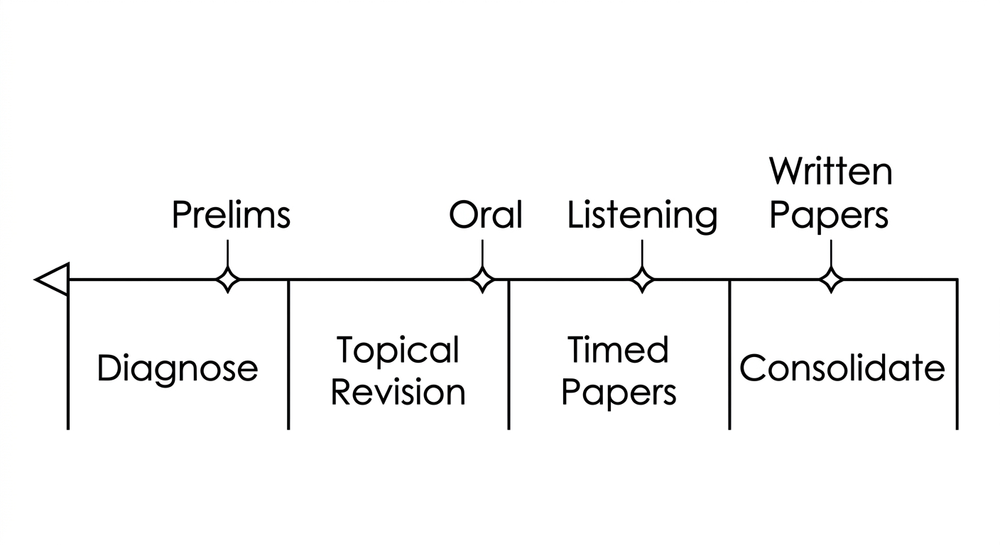
Weeks 14–10 — Diagnose and rebuild (roughly the first month). Use the diagnosis above to pick the handful of topics that are genuinely shaky and do focused, topical work on them. This is the only window where it's worth slowing down and reteaching a concept properly. Mix the topics rather than blocking them — a page of fractions, then a page of ratio, then back — because jumbled practice forces the child to choose the method, which is exactly what the real paper demands. Blocking ten of the same question in a row teaches a child to copy the last one's steps, not to recognise the problem.
Weeks 10–6 — Timed papers, properly (around the prelim window). Now bring in full past-year papers, but do them in the way that actually builds exam stamina. There's a right way to use them, and most families skip two of the three steps.
Weeks 6–3 — Spacing and orals. Keep cycling weak topics back in instead of declaring them "done". The brain remembers what it has to retrieve after a gap, not what it saw most recently — so a topic revised in week 11 should be revisited in week 7 and again in week 4. This is also the window for oral and listening practice, since those papers come first. Read passages aloud together; talk through a picture for two minutes a day.
Weeks 3–0 — Consolidate and protect sleep. Stop introducing new content. The last fortnight is for light review of summary notes, a couple of timed papers to keep the rhythm, and — this matters more than another paper — sleep.
How to actually use a past-year paper
This is the single most wasted resource in Singapore households, so let me be precise. A past-year paper is worth three sittings, not one:
- Do it timed, under exam conditions. Phone away, clock running, no peeking. The point is to rehearse the pressure, not just the questions. A child who can solve every problem at home and runs out of time in the hall has a timing weakness you can only find this way.
- Mark it properly, against the scheme. Not "mostly right" — to the mark. Did the unit get written? Was the bar model labelled? Did a "give two reasons" answer actually give two? This is where the marks hide, and it's exactly the kind of marking IllumiTutor was built to do — reading a child's working like an experienced marker and pointing at the precise spot a mark was lost.
- Redo every wrong question — a day or two later. Not the same evening, when the answer is still warm in memory. Leave a gap, then redo it cold. If the child can't reproduce the correct method after the gap, it never went in, and you've just caught it in time.
Skip steps two and three and you've spent ninety minutes confirming what your child already knew.
Common mistakes in the final stretch
Mistaking volume for progress. Ten papers half-marked teach less than two papers fully worked through, redone, and understood. The corner score is the least useful thing on the page.
Cramming new content too late. I've watched families introduce a brand-new heuristic or a fresh topic in the last fortnight, out of fear that they "haven't covered everything". A half-learned new method is worse than none — under pressure the child reaches for the shaky thing and the familiar thing collapses with it. After the prelims, the job is consolidation, not coverage.
Over-drilling to exhaustion. A tired brain doesn't store much. Past a point, more hours buy diminishing returns and rising anxiety, and the next morning's paper is sat by an exhausted child. The plan should have rest built in, not bolted on when someone burns out.
Ignoring the orals. Because the written papers loom largest in everyone's mind, the August oral and September listening components get neglected — then lose marks that were entirely winnable with five minutes of daily reading-aloud.
Carrying the parent's anxiety into the room. This is the quiet one. A child reads a parent's face faster than any mark scheme. Extra reminders, hovering, the comparison to the neighbour's child — all of it raises the very stress that depresses performance. Your calm is part of the revision plan.
What to do this week
Sit down with the last marked paper from each subject and write three named weaknesses per subject — not "Maths is weak", but "doesn't label bar models", "drops the unit", "guesses the Science keyword". That single page is your plan for the next hundred days.
Then pick one past-year paper and run the full three-step cycle on it: timed this weekend, marked properly against the scheme, the wrong questions set aside to redo midweek. Do that once and you'll feel the difference between practising and just doing papers.
And put one thing on the calendar that isn't revision — a walk, a proper dinner, a normal Sunday. The child who arrives at the August orals rested and unhurried is already several marks ahead of the one who arrives frayed. That's not soft advice. It's strategy.
Keep learning
Related PSLE guides
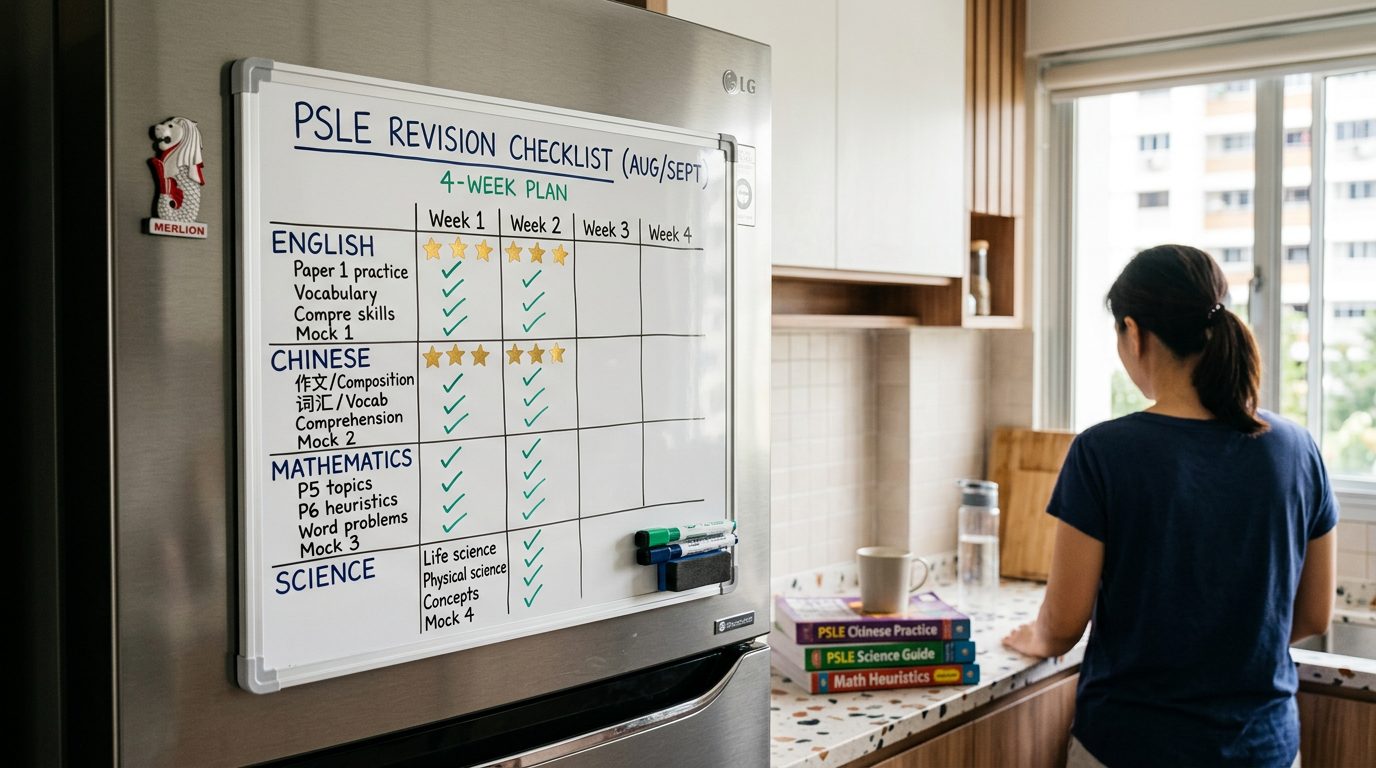
The Final 4 Weeks: a Subject-by-Subject PSLE Checklist
With orals done and the written papers weeks away, this is consolidation season, not new-content season. A subject-by-subject checklist for the last month — and the band-boundary targeting that actually moves a score.
1 Sept 2026 · 10 min read

PSLE Exam Week: What to Do the Night Before Each Paper
A teacher's night-before-and-morning-of routine for PSLE exam week — what to pack, light review not cramming, sleep, breakfast, arriving early, and staying calm paper to paper.
8 Sept 2026 · 10 min read

Managing PSLE Exam Stress: a Calm Final-Stretch Plan
How to keep your child — and yourself — calm in the last few weeks before the PSLE: sleep, routine, realistic expectations, and the signs that worry has tipped past normal nerves.
18 Aug 2026 · 10 min read
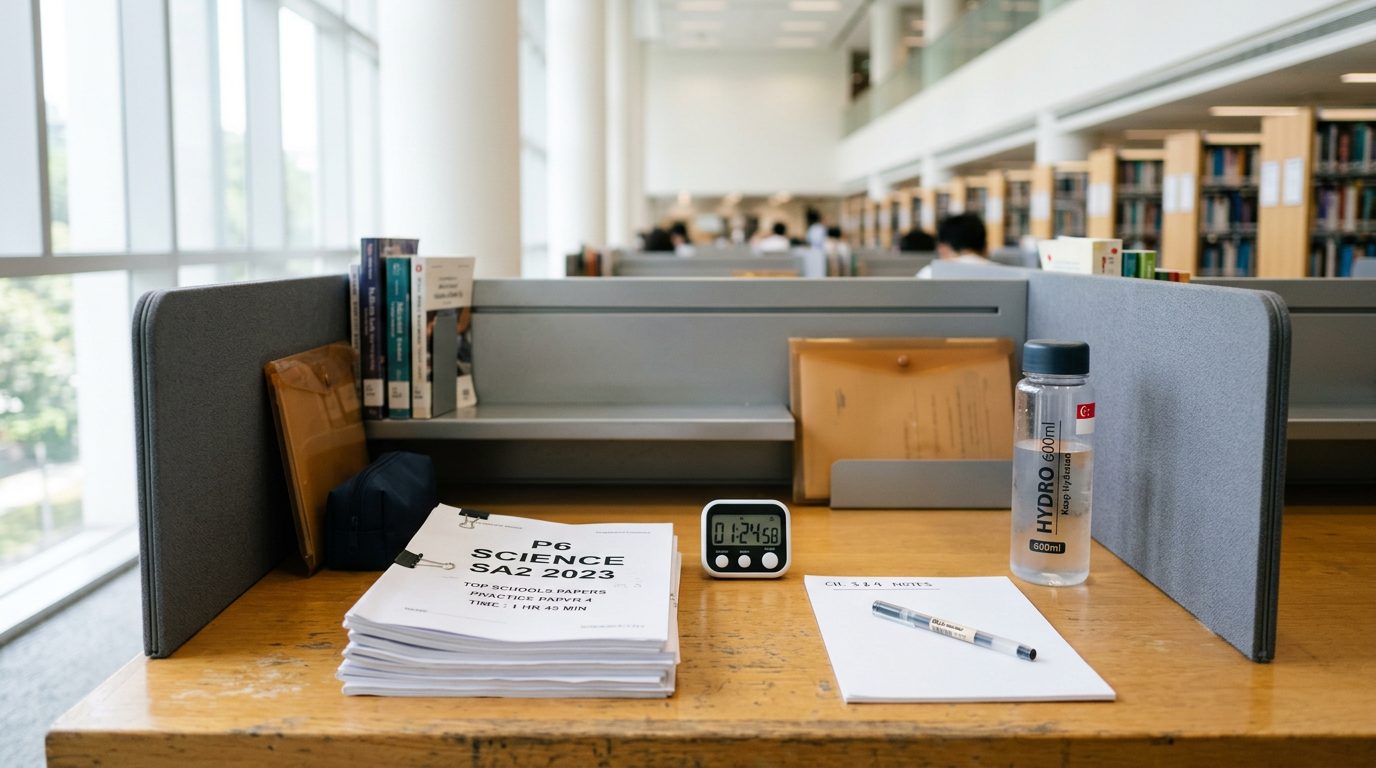
How to Use PSLE Past-Year Papers Properly
Most families do papers the way that feels productive and learns the least. Here's how to use PSLE past-year papers so each one is worth three sittings, not one.
30 Jun 2026 · 10 min read