Types of Materials
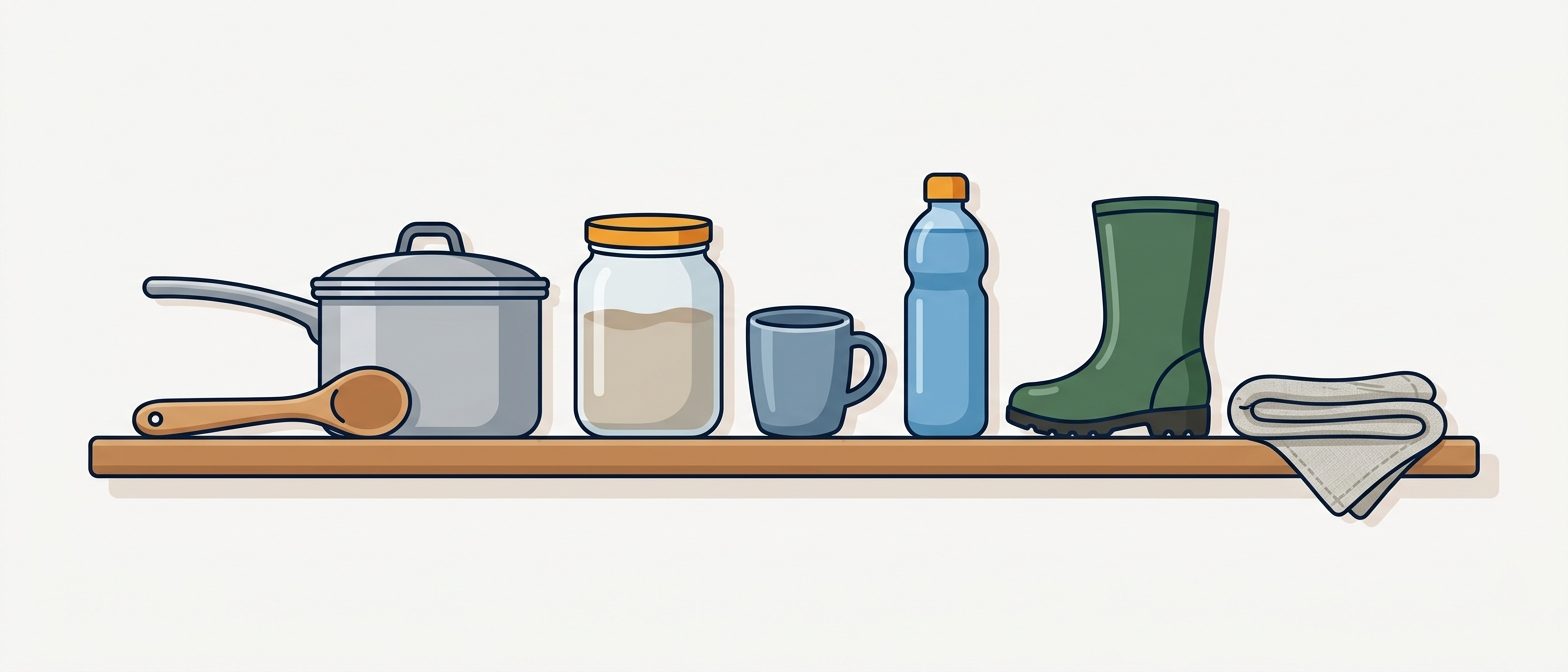
Common materials like wood, metal, glass, plastic and fabric — which are natural or man-made, and why each suits a particular job.
⏱ 8 min · 🎯 4 things to master
Look around your room right now. Your chair, your water bottle, your window, your pencil, your school shoes — almost everything is made from just a handful of common materials. Wood, metal, glass, ceramic, plastic, rubber and fabric do most of the work in the whole world. And here is the clever part: nobody picks a material by accident. Each one is chosen because what it can do matches the job. In this note you will learn the common materials, sort which ones are natural and which are man-made, and master the exact words your PSLE marker is waiting to read.
Parents: the blue dotted words are tappable definitions, and the sorting game lets your child predict first, then tap to check. Naming a material and giving the reason out loud is exactly the skill the marker rewards — fifteen minutes of doing it together beats an hour of reading.
By the end you'll be able to look at any object, say what it is made of, tell if that material is natural or man-made, and name the property that makes it right for the job. Let's meet the materials.
The materials around you
Every material starts somewhere. Some are — we take them from plants, animals or the ground. Others are — people build them by changing one material into another. Let's group them that way.
Natural materials
Wood comes from the trunks of trees, so it is natural. It is strong, and most wood floats on water. You see it everywhere as an everyday solid: furniture, pencils, chopsticks.
Metal comes from ores dug out of the ground, so it is natural too. Metal is strong and shiny, and it is a very good of heat and electricity. Think of pots, electrical wires and cutlery.
Build the circuit yourself and test which everyday materials let electricity flow — you might be surprised by a few of them.
Which materials let electricity through?
Predict first: Put a metal paperclip in the gap — what happens to the bulb?
Rubber comes from latex, the milky sap of rubber trees, so PSLE treats it as natural. (Some rubber is also made by people, but stick with natural rubber from latex.) It is waterproof, flexible, and a poor conductor. You meet it in car tyres, erasers, gloves and rain boots.
Man-made materials
Glass is made from sand that is heated until it melts, so it is man-made. Glass is usually transparent, but it is — drop a cup and it shatters. Windows, drinking glasses and bottles are made of glass.
Ceramic is made from clay that is shaped and baked hard, so it is man-made. Ceramic is brittle, and it does not conduct heat or electricity well. Plates, floor tiles and flower pots are ceramic.
Plastic is made from crude oil (also called petroleum), so it is man-made. Plastic is waterproof and light, it can be flexible, and it is a poor conductor of heat and electricity — that makes it a good . Bottles, bags and chairs are often plastic.
Fabric — it depends
Fabric (cloth) is a special case. Some fabric is natural: cotton comes from the cotton plant, wool comes from sheep, and silk comes from silkworms. Other fabric is man-made, like nylon. Many fabrics are absorbent, and most are poor conductors. Your clothes, towels and curtains are all fabric.
Natural or man-made?
Time to test yourself. Predict the first one, then tap each material to check which group it belongs to and why.
Natural or man-made?
Predict first: Is glass natural or man-made?
Choosing the right material
Knowing the material is only half the job. The marks come from matching a material to the property that makes it right for a task. This links straight back to the Properties of Materials note, where we met absorbency, flexibility, strength and more. Here are the matches you will see most often.
A pot is metal because metal is a good conductor, so heat passes through quickly to cook the food. A window is glass because glass is transparent, so you can see outside. A raincoat is plastic because plastic is waterproof, so the rain runs off. A tyre is rubber because rubber is flexible and waterproof and grips the road. A towel is fabric because cloth is absorbent, so it soaks up water.
Now think about the handle of a metal pot. The pot itself is metal so it heats fast — but the handle is often covered in plastic. Why?
🤔 Predict first: Why are electrical wires covered in plastic on the outside?
Quick recap
🎯 Mastery check
Answer all 8 — your progress is saved on this device.
Glass is made by heating sand until it melts. Glass is therefore a…
Which of these materials is natural?
A cooking pot is made of metal so that it heats food quickly. Which property of metal makes it right for the job?
The handle of a metal pot is covered with plastic. Why is plastic chosen for the handle?
A drinking glass shatters the moment it slips off the table. The glass is best described as…
You want a material for a raincoat that keeps you dry. Which material and reason is best?
Rubber comes from the latex sap of rubber trees. Which property makes rubber a good choice for car tyres?
A student needs a towel to dry their hands after washing. Which material and reason is correct?