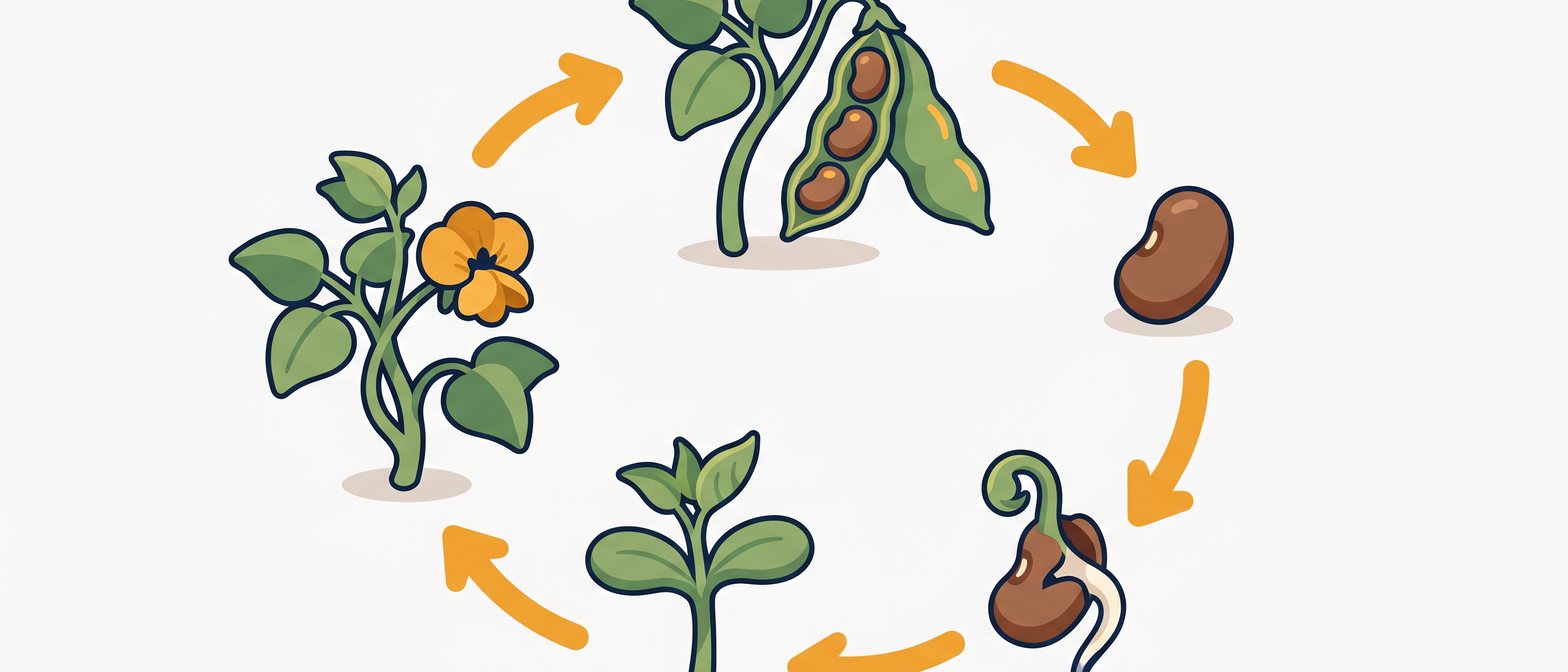
Life Cycle of Plants
The repeating stages of a plant's life — seed, germination, seedling, adult, flower and fruit — and why the cycle begins again.
⏱ 10 min · 🎯 3 things to master
Every mango you eat at the school canteen started as a tiny seed. That seed sprouted, grew into a tree, flowered, and eventually made new seeds inside a fruit — those seeds can grow into new mango trees. Then it happens again. And again. That is not a coincidence; it is a life cycle. Understanding this cycle is one of the most important ideas in the PSLE Cycles theme.
Parents: let your child spin through the interactive wheel below and predict what comes after the flower before you tell them — saying it out loud is how it sticks. The tappable blue words are definitions, and the Teacher's tip boxes name the exact keyword the PSLE marker awards.
By the end you'll be able to name every stage of the plant life cycle, explain why the cycle repeats, and use the exact keywords your marker is looking for. The three ideas we'll master are: what a life cycle is, the stages of the plant life cycle, and why the cycle keeps going.
What Is a Life Cycle?
A is the complete series of changes a plant goes through — from the moment it begins as a seed, through all its growth stages, right up to the point where it produces new seeds of its own.
Here is the key idea: the word "cycle" means it goes round and round. Once the new seeds are made, they can germinate and grow into new plants, which make more seeds, which grow into more plants… The process never really ends. That circular, repeating pattern is what makes it a cycle, not just a sequence.
The Stages of the Plant Life Cycle
The plant life cycle has six stages. Spin through them in the experiment below — predict what comes after the flower first, then advance each stage and watch the cycle complete.
Spin the plant life cycle
Predict first: What comes AFTER the flower in the plant life cycle?
Let's look at each stage closely.
Stage 1 — Seed
A seed is the starting point of the plant life cycle. Inside every seed is a tiny plant embryo and a store of food to help it begin growing. Seeds come in many shapes and sizes — a coconut is a seed, and so is a tiny sesame seed — but they all contain that waiting embryo.
Stage 2 — Germination
When a seed gets the right conditions (water, air, and warmth), it begins to grow. This process is called . The (the first root) pushes down into the soil, and the shoot pushes up towards the light.
🤔 Predict first: Which THREE conditions does a seed need to germinate?
Stage 3 — Seedling
After germination, the tiny plant is called a . The seedling grows its first true leaves, which can now capture sunlight and make food through photosynthesis. The roots grow deeper to absorb water and minerals from the soil.
Stage 4 — Adult Plant
The seedling keeps growing until it becomes a fully grown adult plant with a strong stem, many leaves, and a well-developed root system. The adult plant can make all the food it needs on its own.
Stage 5 — Flowering Plant
When the adult plant is mature, it produces . Flowers are the plant's reproductive organs. They contain pollen and attract insects and birds that help carry that pollen to other flowers — a process called pollination.
Stage 6 — Fruit with Seeds
After pollination, the flower develops into a . The fruit protects the seeds inside and helps spread them — think of a durian falling from a tree, or a bird eating a berry and dropping the seeds far away. Those seeds are now ready to start the cycle all over again.
Why Does the Cycle Repeat?
Here is the question many students find hard to answer: why does the cycle keep repeating?
The short answer is reproduction. Plants reproduce — they make new plants of their own kind — so the species can survive. Each fruit contains seeds, and each seed carries the instructions to build a new plant. As long as those seeds find the right conditions, they will germinate and the cycle begins again.
The cycle also keeps the population of plants going. If plants only lived and died without making seeds, they would eventually disappear. The life cycle is nature's way of making sure plants keep going from one generation to the next.
🤔 Predict first: Why is the plant life cycle described as a 'cycle' rather than a straight line?
Watch Out — Easily Mixed Up
These are the most common mistakes students make on the Cycles topic.
Quick Recap
🎯 Mastery check
Answer all 8 — your progress is saved on this device.
What is the correct order of stages in the plant life cycle?
Ahmad says a seed needs sunlight to germinate. Is he correct? Why?
A student finds a very young plant that has just grown from a seed. It has a short stem and its first small leaves. What stage is this?
Why do plants produce fruits?
Why is the plant life cycle called a "cycle" and not a "line"?
What happens to a flower AFTER pollination takes place?
A mango seed falls into a patch of soil with moisture, oxygen and warm temperature. What process is likely to happen next, and what does the plant use for energy at this stage?
Plants reproduce through the life cycle. Which PSLE keyword best explains why this is important for the species?