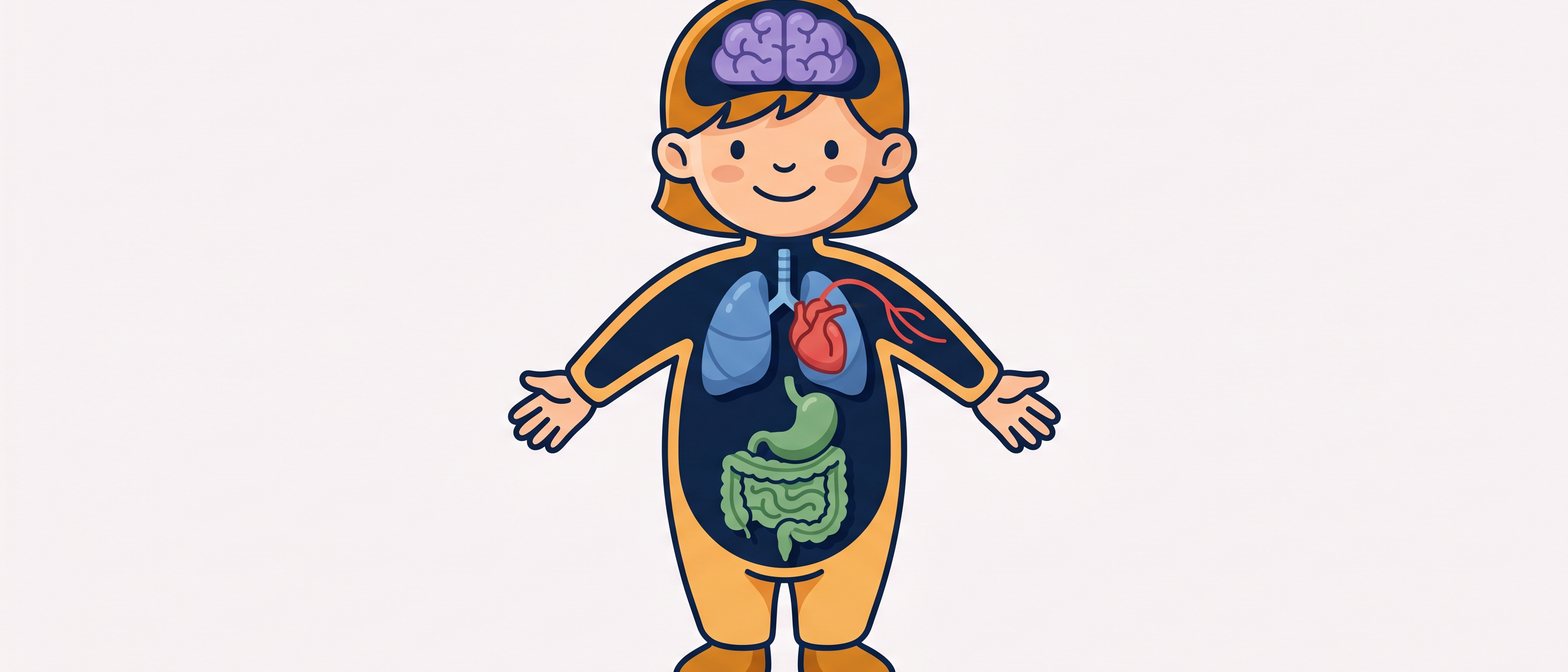
The Human Body Systems
How organs group into systems — digestive, respiratory, circulatory and more — and how those systems work together to keep the body running.
⏱ 13 min · 🎯 4 things to master
You breathe, eat, think and move all at the same time without having to remind yourself. That is not magic — it is because your body is organised into systems. A system is a group of organs that each play a different role, but work together to do one big job. Your lungs and heart are in different systems, yet they depend on each other every second of the day. In this note you will match organs to their systems, find out what each organ actually does, and learn the exact keyword the PSLE marker is looking for.
Parents: let your child tap each organ and make a guess before revealing the answer — predicting first is what makes the keyword stick. The blue dotted words are tappable definitions, and the Teacher's tip boxes name the precise PSLE phrase.
By the end you will be able to name the four main systems, place each organ into the right system, and explain how the organs in a system work together. The four we will explore are: the digestive system, the respiratory system, the circulatory system, and the nervous system.
What is a System?
Your school timetable has a timetable system — every teacher, every classroom and every time slot works together so that all the lessons happen in the right place at the right time. Your body uses the same idea. A is a group of , where every organ has a different job, but all the organs in the group work together to do one big task.
Think of it this way: the heart alone cannot keep you alive. It needs blood vessels to carry the blood it pumps, and it needs the lungs to load that blood with oxygen first. That is why the heart and the blood vessels form the circulatory system — together they do the job that neither could do alone.
🤔 Predict first: A single organ can do the same job as a whole system — true or false?
The Digestive System
Your body cannot use a bowl of rice the way it comes off the plate. The grains have to be broken all the way down into tiny nutrients small enough to pass into your blood. That breaking-down and absorbing process is what the does.
Here are the key organs and what each one does:
- — mixes food with digestive juices and breaks it into smaller pieces.
- — absorbs the nutrients from the digested food into the blood.
- — removes water from waste and passes what is left out of the body.
The mouth, oesophagus (food pipe) and other organs all play a part too — food travels the whole length of the digestive system in order, passing from one organ to the next.
🤔 Predict first: Which organ absorbs nutrients into the blood?
The Respiratory System
Every cell in your body needs oxygen to release energy from food. The job of getting oxygen in and pushing carbon dioxide out belongs to the .
- — inflate as you breathe in, filling with air. Oxygen passes through the thin walls of the lungs into the blood. Carbon dioxide passes the other way — out of the blood and into the lungs to be breathed out.
- — the airway that carries air between the outside world and the lungs.
- The nose, mouth, and smaller airways inside the lungs all form part of the same system.
Notice that the lungs do not pump blood — that is the circulatory system's job. The two systems work together: the respiratory system loads oxygen into the blood, and the circulatory system then carries that blood to every cell in the body.
The Circulatory System
Oxygen in your blood is no use if it cannot reach your toes, your brain and every other cell. Delivering it — along with nutrients from digestion — is the job of the .
- — beats around 70 times a minute, pushing blood through the body continuously.
- — carry blood from the heart to all the organs and back again.
- — transports oxygen (from the lungs) and nutrients (from digestion) to cells, and carries carbon dioxide and waste back to be removed.
The circulatory system is tightly linked to the respiratory system: blood returning from the body drops off carbon dioxide at the lungs and picks up fresh oxygen to deliver on the next circuit.
The Nervous System
When you step on a sticker on the void deck floor, you feel it instantly. When your teacher calls your name, you look up immediately. That speed of communication — from every part of your body to your brain and back — is what the does.
- — receives signals from all over the body and decides what to do. It also controls things you do not think about, like your heartbeat and digestion.
- — act like cables, sending messages from sense organs (eyes, skin, ears) to the brain, and commands from the brain back to muscles and organs.
The nervous system also works together with the other systems — your brain can speed up your heart rate when you are running, and it controls the muscles in the digestive system that push food along.
Match the Organ to Its System
Now put it all together. Tap an organ to select it, then tap the system where it belongs. Every organ has one correct system. Check your score as you go.
Match the Organ to Its System
Predict first: Which system does the heart belong to?
Systems Work Together
No system in your body works alone. Here are three examples of systems working as a team:
- Running to catch the MRT: Your nervous system detects you are late (senses). Your circulatory system pumps more blood to your muscles (heart beats faster). Your respiratory system breathes faster to bring in more oxygen. Three systems, one goal.
- Eating a bowl of noodles: Your digestive system breaks the noodles into nutrients. Your circulatory system carries those nutrients in the blood to your muscles and organs. The food becomes the fuel.
- Touching a hot pot: Your nervous system fires a pain signal to your brain in a fraction of a second. Your brain sends a command back to your arm muscles. You pull your hand away — before you even have time to think about it.
🤔 Predict first: You are running in a school relay race. Which TWO systems work together to get more oxygen to your muscles?
Watch out — these are easily mixed up
Quick recap
🎯 Mastery check
Answer all 8 — your progress is saved on this device.
A system is best described as…
The heart belongs to which system?
Which organ absorbs nutrients from digested food into the blood?
You breathe in deeply before a swimming race. Which system is carrying out gas exchange in your lungs right now?
Which organ is the control centre of the nervous system?
A student says the trachea is part of the digestive system because it is near the food pipe. Is this correct?
When you sprint across the school field, your heart beats faster to supply your muscles with more oxygen. Which two systems are working together here?
After you eat a bowl of chicken rice, nutrients from the rice pass into your blood. Which organ does this absorption happen in, and which system does it belong to?