Bacteria
Microscopic living things found almost everywhere: the helpful kinds behind yogurt and decay, and the harmful kinds that cause disease.
⏱ 7 min · 🎯 4 things to master
Right now, as you read this, trillions of bacteria are living on your skin, in your mouth, and inside your tummy. That sounds scary — but here is the surprise: many are tiny helpers, while some are troublemakers. Bacteria are far too small for your eyes to spot, yet they are busy everywhere — turning milk into yogurt, helping you digest your lunch, and cleaning up dead leaves in the soil. In this note you'll learn what bacteria really are, sort the helpful ones from the harmful ones in a quick game, and practise the key words.
Parents: this note has a tap-through sorting game and a "predict first" box — let your child guess before they reveal. The blue dotted words are tappable definitions, and the tip boxes name the precise keyword the PSLE marker awards. Fifteen minutes together beats an hour alone.
By the end you'll be able to explain what bacteria are, give examples of useful and harmful bacteria, and use the exact PSLE keywords. Let's start with the basics.
What are bacteria?
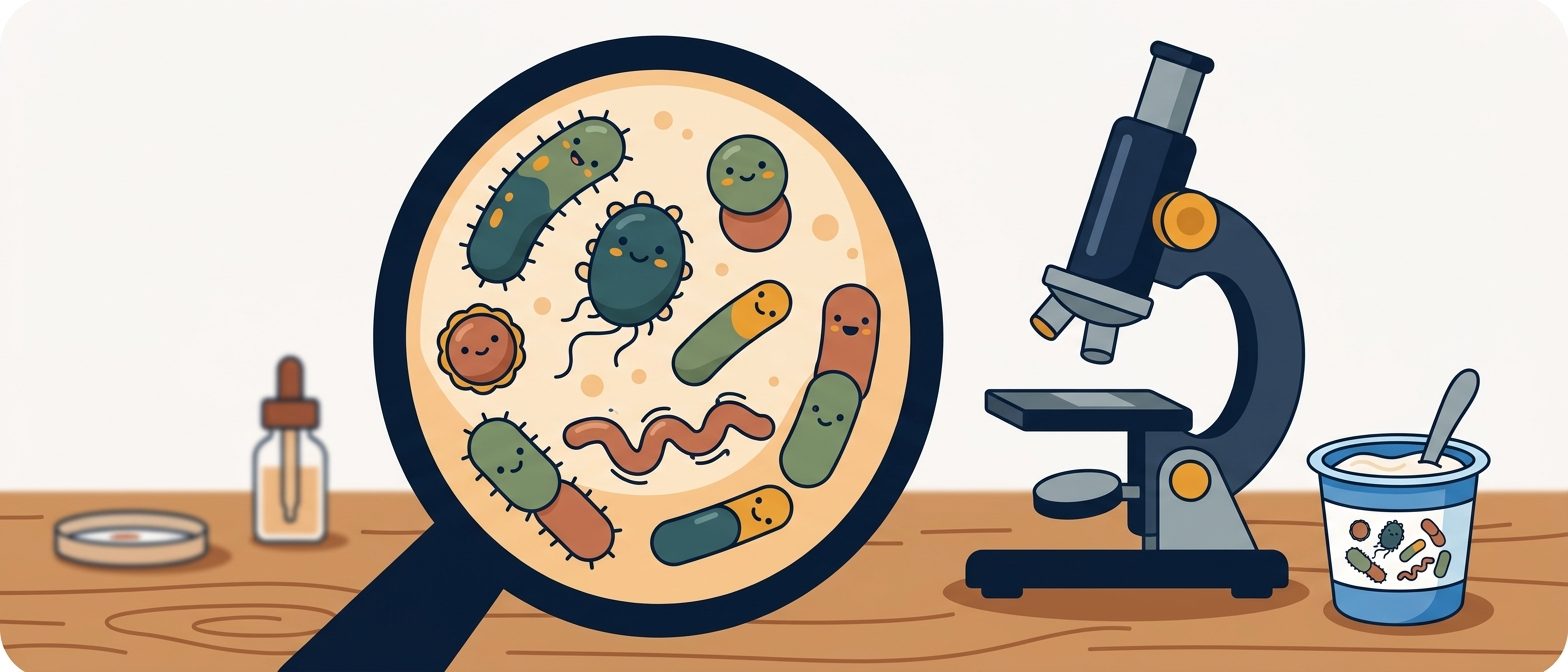
You cannot see a single bacterium with just your eyes — not even one. Bacteria are , which means they are living things that are far too small to see with the naked eye. To look at one, scientists use a , a tool that makes tiny things look much bigger.
Where do bacteria live? Almost everywhere. They are in the air you breathe, the water you drink, the soil in a garden, and even on and inside your own body. Different bacteria also come in different shapes — some are round, some look like rods, and some are curved like a spiral.
Many bacteria obtain food from other organisms or from dead material, while some bacteria make their own food. Some bacteria are : they break down dead plants and animals through , returning useful nutrients to the soil and the environment.
🤔 Predict first: All bacteria are harmful germs that make you sick. True or false?
So the keyword to remember here: a bacterium is a micro-organism.
Useful bacteria
Here is the part most people never expect — many bacteria are our helpers, doing jobs we could not do without them.
Some bacteria are used to make food. The bacterium Lactobacillus turns milk into yogurt, and other bacteria help make cheese. Inside your tummy, helpful bacteria in your gut help you digest your food and stay healthy.
Bacteria also clean up the planet. Some kinds break down oil after an oil spill in the sea, helping clean the water. And decomposers recycle dead leaves and animals into simpler substances, acting like a natural fertiliser that feeds new plants.
Harmful bacteria
Not every bacterium is friendly. A small number are harmful, and these are the ones we have to be careful about.
Some harmful bacteria cause sickness and disease. Salmonella and certain strains of E. coli can give you food poisoning, with a tummy ache and a trip to the toilet. Other bacteria grow on food that is left out too long and make it go bad — this is called spoilage, which is why milk turns sour and bread grows slimy.
Run the food spoilage experiment — choose where to store your food and see whether bacteria get the chance to grow.
Why do we keep food in the fridge?
Predict first: After 5 days, which bowl of rice spoils first?
Useful or harmful?
Time to sort them out. Each bacterium below is either useful or harmful — predict first, then tap each one to check.
Sort the bacteria
Predict first: Bacteria that turn milk into yogurt — useful or harmful?
Bacteria vs fungi
Bacteria are not the only tiny recyclers. Fungi — like mould and mushrooms — are also decomposers: they break down dead plants and animals through decomposition too. So both bacteria and fungi help return nutrients to the soil. The difference is that bacteria are micro-organisms, while many fungi (such as mushrooms) are big enough to see. Learn more in the Fungi note next.
Quick recap
🎯 Mastery check
Answer all 7 — your progress is saved on this device.
Why can you not see a single bacterium with just your eyes?
A scientist wants to look closely at bacteria. Which tool does she need?
Bacteria do not all look the same. Which of these describes their shapes?
Some bacteria break down dead leaves and animals into simpler substances that feed the soil. What is this process called?
Which is an example of a useful bacterium and its job?
A plate of food left out too long goes bad and smells sour. Which bacteria caused this?
A student writes that all bacteria are harmful germs. Why is this wrong?