
PSLE English · 9 min read
PSLE English Spelling: The Quiet Marks Most Kids Lose
A girl I taught years ago wrote the most imaginative compositions in the class. Pirates, time machines, a grandmother who could talk to cats — she had ideas the other children didn't. And every single piece came back with the same small wounds: "embarassed" with one r. "definately". "occured". Her stories soared; her spelling kept clipping her wings, two or three marks at a time, in a paper where two or three marks is the difference between an AL.
Spelling is the quietest mark-loser in PSLE English. It rarely announces itself. A child who can't do a problem sum knows they're stuck. A child who spells "necessary" wrong feels completely sure — and that confidence is exactly the problem.
Where PSLE English spelling actually costs marks
Parents sometimes assume spelling only matters in "the spelling section". It's broader than that. PSLE English is a 200-mark subject across four papers, and PSLE English spelling shows up in two of them.
The direct hit is Paper 2, Booklet B: Editing for Spelling and Grammar. In the current format this section is worth 10 marks — five spelling errors and five grammar errors hidden in a short passage. Each numbered word is either correct or wrong; the child has to spot the misspelt ones and write the correction in the box. There's no partial credit and no benefit of the doubt. You either fix "recieve" or you don't.
The indirect hit is Paper 1: Writing. Both the situational piece and the composition are marked on Content and Language, and spelling sits squarely inside that Language band alongside grammar, vocabulary and punctuation. SEAB's own assessment objective for the paper lists "accurate vocabulary, grammar, punctuation and spelling" in one breath. So a story full of misspellings doesn't just look careless — it pulls down the Language mark on the largest single component of the paper.
The reassuring part: editing is one of the most trainable sections in the whole paper. Comprehension open-ended takes years of reading to build. Editing rewards a child who has simply met the commonly-tested words often enough to recognise the wrong one on sight.
The tricky words that trip Singapore kids up
Misspellings aren't random. After enough scripts you start seeing the same potholes, and they cluster into patterns. These are the ones that show up again and again at upper primary:
- Silent letters — wrestle, knuckle, thumb, fasten, glisten. The child writes what they hear, and the silent letter vanishes.
- Double consonants — embarrassed (two r, two s), accommodate (two c, two m), occurred, committee, necessary. Knowing a letter doubles somewhere isn't enough; you have to know which one.
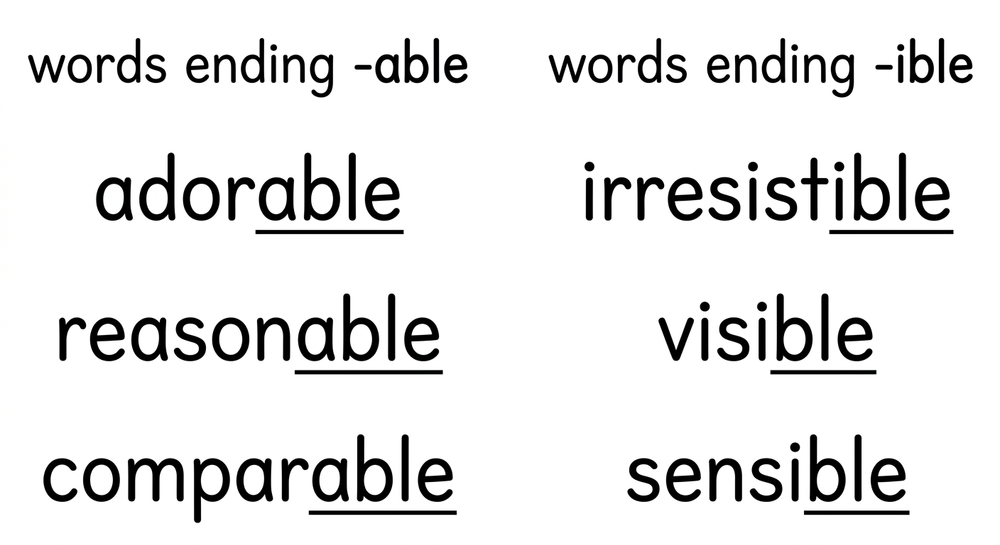
- -able vs -ible — adorable, reasonable, comparable against irresistible, visible, sensible. Same sound, different ending, no reliable rule a ten-year-old can apply under time pressure.
- ie vs ei — shield, retrieve, yield against deceit, receive, vein. "I before E" famously betrays you the moment you trust it.
- -ough words — although, thorough, drought, cough, bought. One spelling, half a dozen sounds.
- Soft c and soft g — medicine, certificate, gentle, gesture, oxygen. The sound says "s" or "j"; the letter doesn't.
- Commonly confused pairs — stationary / stationery, principal / principle, desert / dessert, advise / advice, practise / practice. These are the cruellest, because both spellings are real words. A spellchecker won't save your child here, and neither will reading aloud.
One more, worth a sentence on its own: Singapore uses British spelling — colour not color, favour, centre, organise. That part isn't in dispute. What trips children up is exposure: kids who read a lot of American books or play a lot of American games quietly absorb the other defaults, and it surfaces in their writing. Worth a gentle correction when it does.
Why drilling a word list rarely sticks
The instinct is to print a list of 100 tricky words and have the child copy each one five times. I understand the appeal. It feels like work. But copying engages the hand, not the memory — most children can write "accommodate" ten times in a row and still misspell it on Friday's test, because they were never deciding anything. They were tracing.
Spelling sticks when three things happen together: the child sees the word in a sentence (so the meaning anchors it), the child has to produce it rather than recognise it, and a mistake gets corrected immediately, while the wrong version is still fresh and beatable. A weekly spelling test gives you the first and the second, but the correction comes days later, detached from the moment of error. That gap is where the learning leaks out.
This is exactly the thinking behind the spelling game we just put on the site.
Spell Quest: a free game built around those patterns
Spell Quest is a free PSLE spelling game on our marketing site — no sign-up, no account, just open it and play. It's deliberately built around the patterns above rather than a flat A–Z word dump.
Here's how a round works. The child gets a sentence with one word blanked out, plus a clue and the spelling-pattern badge for that word — say, Silent letters or -able / -ible. The first letter is already filled in; they type the rest. Get it right and the points stack, with a streak multiplier that rewards a clean run. Get it wrong, and the game stops, shows the full sentence with the correct spelling highlighted next to what they typed, and makes them read it before moving on. That pause is the point — it's the immediate correction a Friday test can't give.
A few design choices that matter for parents:
- 300 words across 20 patterns — the same families that haunt the editing section: double letters, ie/ei, silent letters, -able/-ible, -ough, soft c and g, and a whole tier of commonly confused pairs like stationary/stationery and principal/principle.
- Unseen words come first. The game tracks what your child has already met (saved on the device) and shows new words before recycling old ones, so a ten-minute session keeps stretching them.
- Pick the time limit — one minute for a quick warm-up before homework, or ten when they're in the mood. There's an untimed mode too, for a child who freezes against the clock.
- An end-of-game review lists every word they missed, what they typed, and the correct spelling — a ready-made list of their weak words, not a generic one.
It won't replace reading widely, which is still the deepest source of good spelling. But for the specific, drillable, recognisable words that editing and Language marks turn on, repetition-in-context is the right tool — and a game is the version of repetition a child will actually come back to.
Common mistakes parents and students make
Treating spelling as separate from "real" English. Children compartmentalise — "this is my spelling list, that's my composition". They don't transfer. The fix is to practise spelling in sentences, which is why context matters more than the bare word.
Trusting the spellcheck reflex. Kids who draft on a tablet learn that a red squiggle saves them. In the exam hall there is no squiggle, and the confused pairs (its/it's, their/there, practise/practice) wouldn't trigger one anyway because they're all real words.
Reading the word instead of producing it. Recognising "rhythm" on a page is easy; writing it from memory is the real test. Practice that only asks a child to read correct spellings builds false confidence.
Cramming the night before. Spelling memory is built by spacing — a little, often. Five minutes a day for two weeks beats an hour the night before, every time.
Letting American spellings slide. If your child writes "color" or "favorite" and you wave it through because "it's basically the same word", you're banking a small mark loss for exam day. A quick "we spell it the British way here" is all it takes.
What to do this week
- Pick one pattern, not twenty. Silent letters, or -able/-ible. Master one family before touching the next.
- Have your child play a couple of short Spell Quest rounds and screenshot the end-of-game review — those missed words are this week's actual list.
- Get them to write three sentences using their three hardest words from that list. Producing, in context — the two things that make spelling stick.
- On any composition or worksheet they bring home, circle misspellings in pencil and have them find the correction. Spotting-and-fixing is the exact skill the editing section tests.
- Quietly correct American spellings as they appear. One word at a time, no lecture.
Spelling marks are the easiest marks to give away and, with the right kind of practice, among the easiest to win back. The marking in our guide to PSLE English writing shows how Language sits beside Content in the composition; if you want the other half of Paper 2 accuracy, the synthesis and transformation breakdown is the companion piece. Both reward the same thing spelling does: precision, practised until it's automatic.
Keep learning
Related PSLE guides
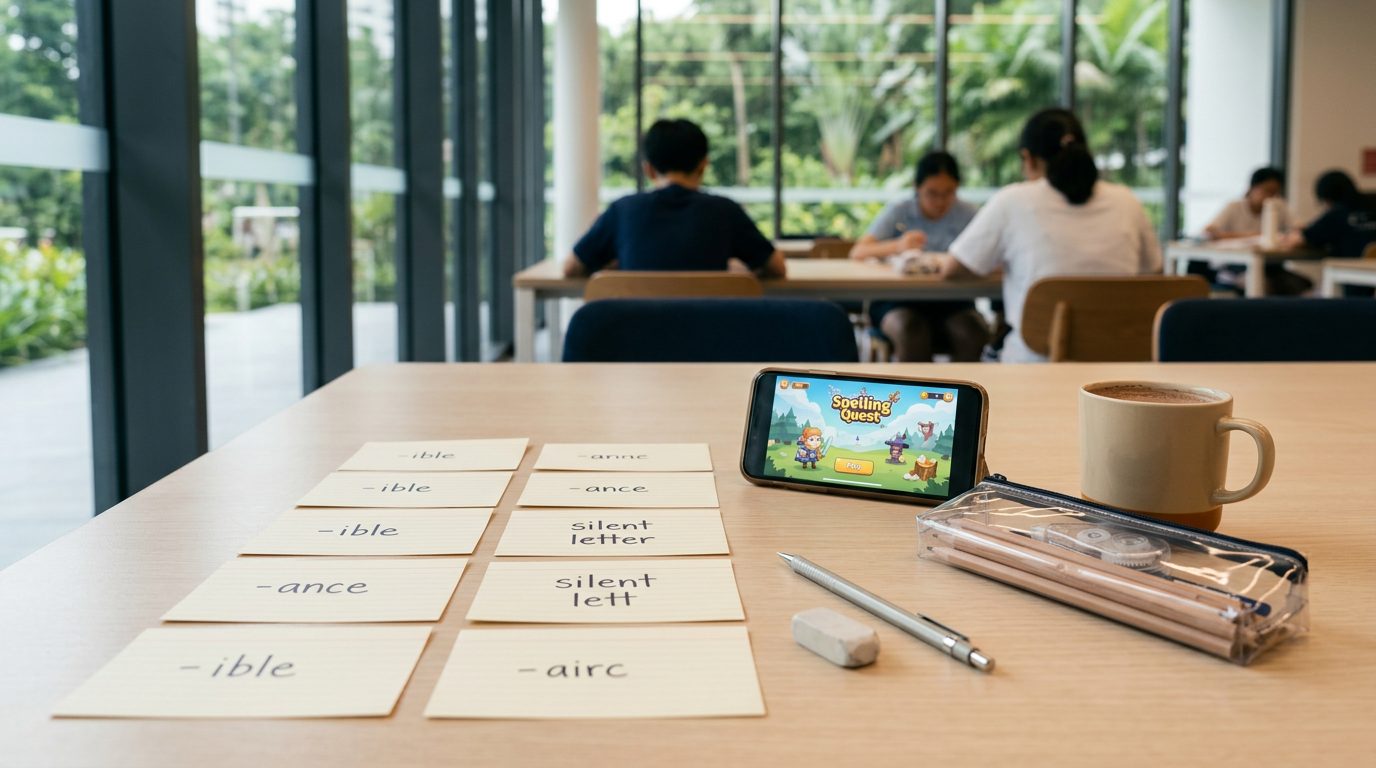
The Word Patterns That Decide PSLE English: From Editing Traps to Vocab Cloze
Why memorising random vocabulary lists fails upper-primary students, the word families that actually cost marks in Paper 2, and how to practice them actively.
7 Sept 2026 · 10 min read

PSLE Vocabulary Cloze: Why All Four Options Look Right
The vocabulary options are near-neighbours separated by usage, not meaning. Why memorising definitions is the wrong drill, and what to do instead.
20 Aug 2026 · 14 min read
PSLE English Cloze: The Three Sections Hiding Under One Name
Three different sections share the name "cloze", and most children revise for all three the same way — by memorising words. Our review of fourteen years of papers says the words almost never repeat, but the frames do.
30 Jul 2026 · 9 min read
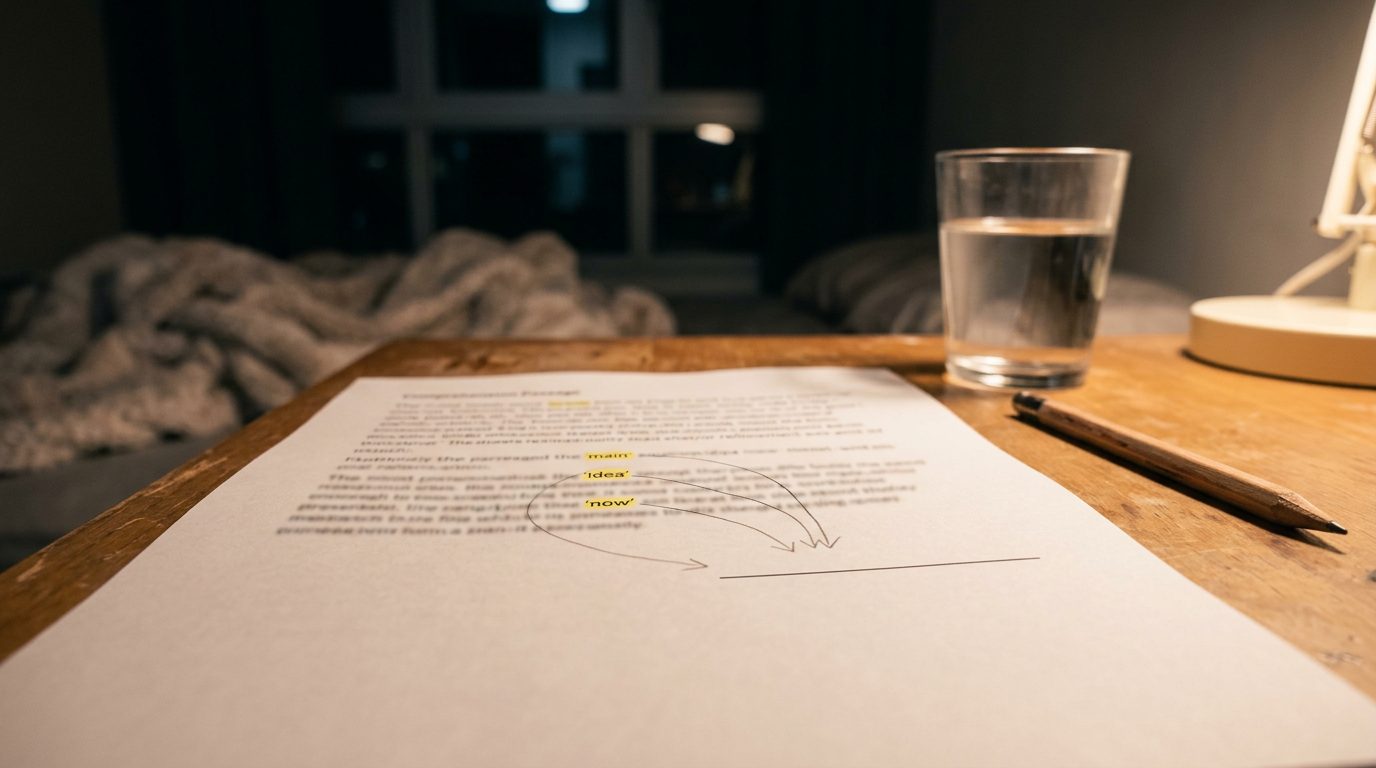
PSLE Comprehension Cloze: How to Read Through the Blank
Why strong readers leak marks in the open cloze, and the three-pass routine that replaces "it sounds right" with evidence you can point at.
13 Aug 2026 · 11 min read